

Kdramas Like Notes from the Last Row: While some K-dramas are full of adrenaline rushes with fast-paced chase scenes and gruesome murder plots, other K-dramas sneakily worm their way into your mind until you are no longer sure of what is real. Netflix’s newest psychological thriller, 맨 끝줄 소년, falls in the former camp.
The six-episode series, directed by Kim Gyu-tae and starring Choi Min-sik, Choi Hyun-wook, Huh Joon-ho, Kim Yun-jin, and Jin Kyung, immediately gets the audience hooked with an intense plot that keeps everyone questioning everything and leaves even more questions unanswered with every new clue revealed. By the time the final episode rolls around, viewers will come to understand that the show was not just tricking its characters but the viewers themselves.
What truly makes Korean drama Notes from the Last Row a riveting show is the creepy aura that runs throughout the series. Seeing how literary professor Heo Mun-oh is becoming more entangled with the narratives spun by Lee Kang is not so much about seeing the mystery unravel itself, but seeing somebody walking into a well-laid trap. The blurring of the lines between imagination and reality in each episode is so seamless that you end up questioning yourself until the drama creates the conditions for what will be one of the best psychological revelations of the year. (I won’t lie; I have yet to get this ending out of my head.)
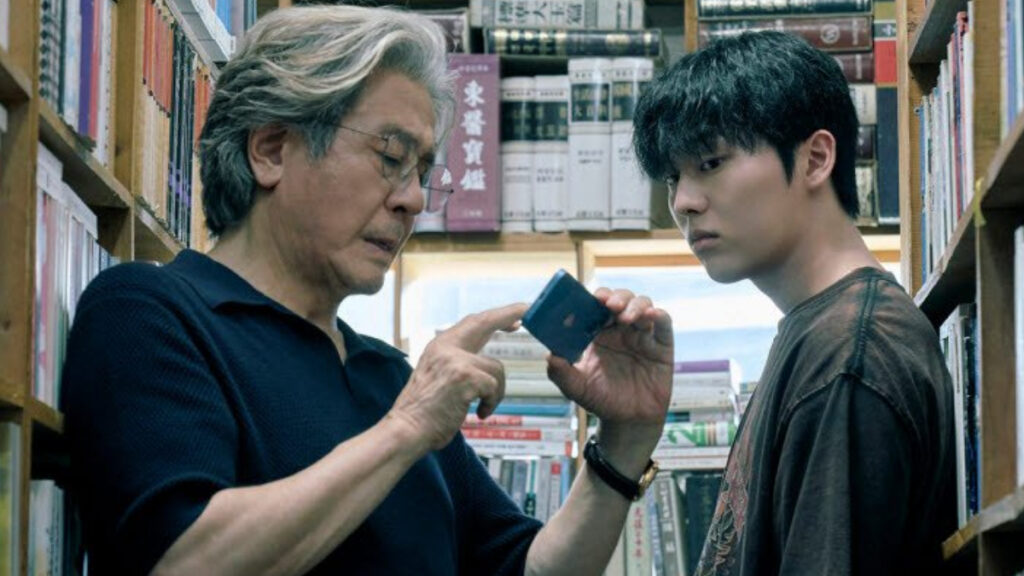
If you’re someone like me who immediately searched for Kdramas similar to Notes from the Last Row that could give you the same chilling effect when the credits rolled, then this article is for you. Although nothing can completely replace the chilling experience, these other five K-dramas get pretty close. Be it unreliable narrators, characters stuck in twisted psychological mind games, or reality falling apart right before your eyes, these five series will have you wondering just like Lee Kang did about Heo Mun-oh’s truth.
Best Psychological Thriller Kdramas Like Notes from the Last Row
Little Women
Upon first look, Little Women may not be considered as a drama similar to Notes from the Last Row, but once the series gets a few episodes in, its presence will become very evident on the list. Starring Kim Go-eun, Nam Ji-hyun, Park Ji-hu, Wi Ha-joon, Uhm Ji-won, and Uhm Ki-joon, the drama tells the story of three sisters whose seemingly normal life gets interrupted when their involvement with one of the richest and most powerful families in South Korea brings them into a series of mysteries, manipulations, and mind games involving corrupt organisations.
What starts off as the hunt for a lost fortune ends up being an entanglement of secrets where the solution to each problem reveals yet another enigma. One of the main factors that contributes to the success of the drama lies in the constant manipulation of the characters as well as of the viewers, showing us one reality and then taking it away again. Little Women gives exactly the same feeling through its elaborate storytelling and surprising plot twists.
Similar to how Lee Kang masterfully guides the information available for Heo Mun-oh, the influential characters in Little Women direct everything behind the scenes, moving people around like pawns on a chessboard. The two works are highly skilled at building up such an unnerving atmosphere that makes one unable to trust anybody, where each word may have another meaning. If you were unable to resist trying to uncover all of the hidden facts in Notes from the Last Row, there is a good chance that you will be equally fascinated with Little Women.
A Killer Paradox
The best thing about Notes from the Last Row is that it always made me think about who is really in control. Was Lee Kang controlling Heo Mun-oh, or is it Mun-oh letting his own urges take control of him? Another thriller which forces you to ask yourself this awkward question is A Killer Paradox, which features Choi Woo-shik, Son Suk-ku, and Lee Hee-jun.
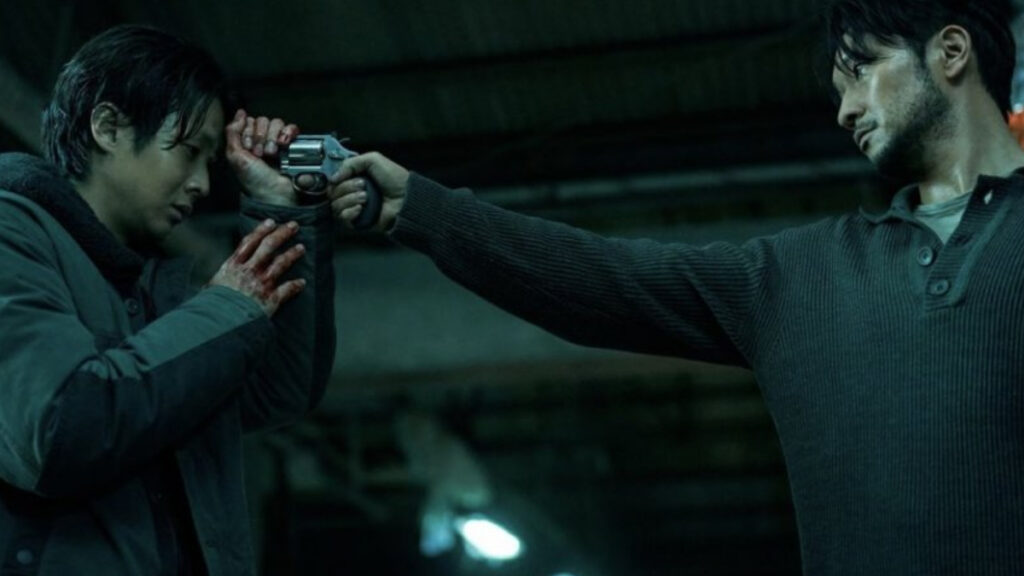
In this Netflix thriller, the life of Lee Tang, an ordinary university student, is transformed forever when, by defending himself against an attacker, he ends up killing a person who turns out to be a serial killer. When murders continue happening one after another, Lee Tang starts feeling that fate itself has chosen him to punish evil people, but Detective Jang Nan-gam does not believe in him. Even though A Killer Paradox is more focused on crime than psychological thriller, it possesses the same interest in unreliable moral values that was found in this drama.
Lee Kang and Heo Mun-oh cannot be considered heroes or villains in the same way as the actions of Lee Tang cannot be judged by traditional criteria of good and bad. Both series benefit from the complexity of psychological analysis of the main characters and keep forcing the audience to change their point of view about the protagonists, episode after episode. The combination of tense atmosphere, ambiguous characters, and lack of a clear picture makes you addicted to them for the same reason you became addicted to Notes from the Last Row.
Lost
Not a thriller, but if there was one aspect about which I could not stop thinking in Notes from the Last Row, it was the void around Heo Mun-oh despite the many twists and turns. Underlying it all was the man whose sense of meaning in life had long disappeared even before Lee Kang appeared in his classroom. It captures this very sentiment well.
Lost stars Jeon Do-yeon and Ryu Jun-yeol, joined by Park Byung-eun and Kim Hyo-jin, in the drama of ghostwriter Boo-jung, who feels like a failure having seen her dreams dissolve, and Kang Jae, the man who leads a seemingly normal life yet suffers from deep loneliness. The link between them does not arise out of romance at all, but from the recognition that there is another person who truly knows the feeling of being lost.
Lost takes things easy and allows the audience to immerse themselves in the experience by spending time with the characters, rather than expecting the show to end in spectacular fashion. While there are no conspiracies and false personas, there are psychological complexities similar to those presented in Notes from the Last Row. For instance, just like Mun-oh gets caught up in someone else’s story because he wants to fill his inner void with something else, Boo-jung and Kang Jae start getting drawn to one another’s stories as they search for meaning in lives that have become boring to them.
Reflection of You
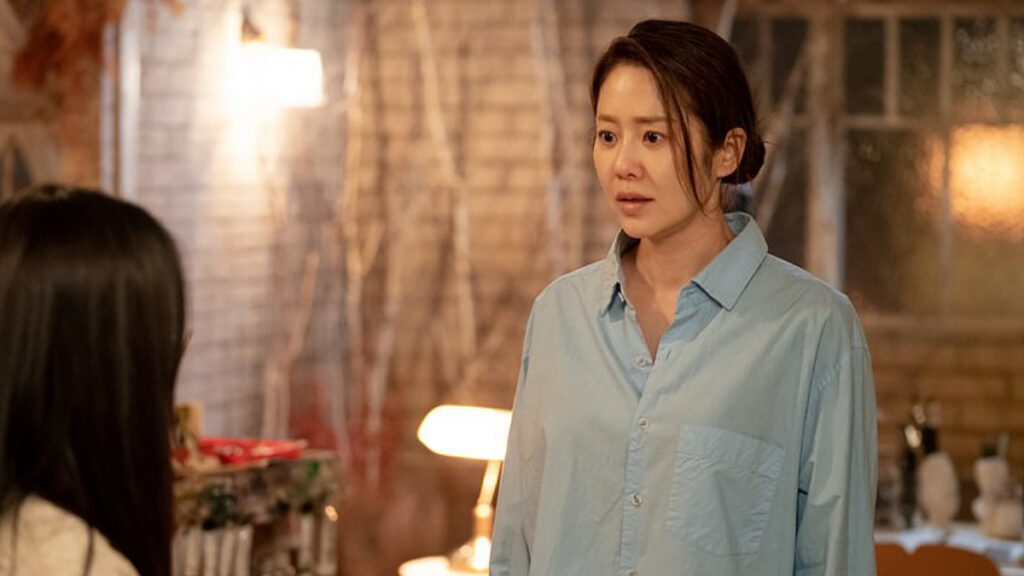
There is something very compelling in watching a character being obsessed with a life not theirs, and Reflection of You captures that obsession with amazing delicacy. With Go Hyun-jung, Shin Hyun-been, Kim Jae-young, and Choi Won-young, the drama tells a story of Hee-joo, a successful painter whose happy life starts falling apart when she encounters Hae-won, a woman related to a dark period in her past. Their meeting gradually uncovers deep secrets, unspoken regrets, and unresolved issues, making it a psychological drama full of emotional complexity in each scene.
Whereas Lee Kang took advantage of Heo Mun-oh by making use of his unfinished relationship with Eun-joo, Reflection of You proves the way the past may silently influence the present. Both serials are more concerned about exposing not some shocking truth but about the way guilt, jealousy, and longing may affect the perception of reality. While Mun-oh believed that there must be something sinister behind the facade of happiness in Su-hun’s family, the characters of Reflection of You find themselves caught up in the images of people that they themselves have invented in their imagination.
Children of Nobody
While some thrillers keep you gasping for breath with their constant motion, there are also thrillers that keep you on edge in silence as they compel you to look at the dark recesses of the human psyche. Children of Nobody is one such thriller. Starring Kim Sun-a, Lee Yi-kyung, Nam Gyu-ri, and Cha Hak-yeon (N), it revolves around the tale of child counsellor Cha Woo-kyung, who faces an unforeseen tragedy after what seems like a normal life. As she finds herself tangled in a series of baffling child abuses along with detective Kang Ji-heon, disturbing poems and other clues connect victims and offenders in a very chilling manner.
The unnerving nature of Notes from the Last Row is also due to Lee Kang’s use of storytelling, which makes fiction seem more credible than the truth. Similarly, Children of Nobody creates an equally eerie effect, but this time through the use of poems and psychological symbolism instead of assignments in fiction. These two dramas reward those viewers who observe the minor details closely, only to later discover that all those conversations and hints had hidden meanings.
Even more important, though, is the fact that neither of these dramas is interested in generating bad guys purely for the sake of sensationalism. On the contrary, they deal with how the scars of childhood trauma influence adult life, thereby creating morally complex characters rather than black-and-white figures.
If you have watched another K-drama such as Notes from the Last Row, which made you question everything and everyone, we would love for you to tell us your favourite picks in the comments section below!

Great content! Keep up the good work!