

Moria Review

Director: Javier van de Couter
Date Created: 2026-08-16 14:58
3.5
Moria Review: Directed by Javier van de Couter, Netflix’s Argentinian drama stars Moria Casán as the present-day version of herself and the narrator, with Sofía Gala Castiglione, Griselda Siciliani, and Cecilia Roth portraying her at different stages of her life, alongside Marco Antonio Caponi, Luis Machín, Micaela Riera, Rafael Ferro, Joaquín Ferreira, Olivia Nuss and others. The series runs for eight episodes, with each episode lasting around 35 to 40 minutes.
Moria Review
The Netflix series charts the journey of Moria from her early days, when she was known as Ana María Casanova and still studied law without any significant connection with the world of entertainment, to her becoming one of the most recognisable people in Argentina. Visiting a theatre for a revue show became the turning point that proved to Casán that she should be on stage.
Further, her career growth in the realms of theatre and television, her complex personal life, her connection to the LGBT community, her strained relationship with her daughter Sofia and controversies will all be part of her story. What intrigued me was the fact that the show was not focused on whether Moria was a good or a bad person in the classical understanding of this concept. She was a woman who built an entire identity on her refusal to do as everybody else did.
What makes this Netflix series Moria unique in my mind is its attempt to understand how Casán managed to create such a persona that would later overshadow the person itself. In this way, instead of merely listing the achievements that followed her career successively, the show aims to uncover the roots of her obsessions.
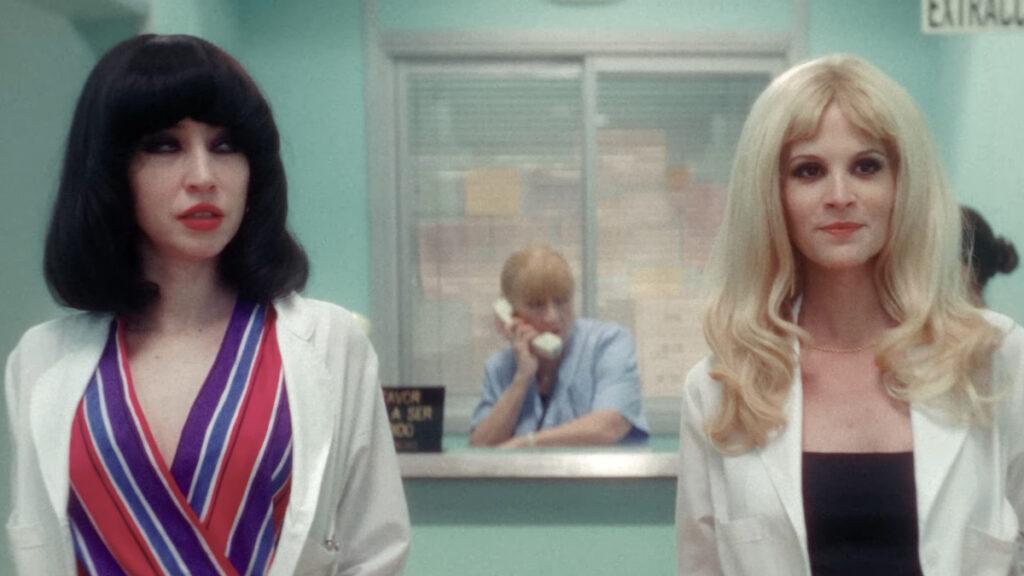
In this regard, Ana’s transformation from the very beginning is highly convincing since she did not have the characteristics of someone who was supposed to become a star. Instead, she is a law student accompanying her boyfriend, Ruben, in the audience at a revue almost incidentally. But the mere sight of these women performing makes some changes in her. She becomes interested not only in dancing but in the idea of being watched. This is important as her desire was not just to be famous.
She constructs her identity through her performance, and for me, it is amazing that this forms the basis of her identity. Ana realises very soon, once she becomes part of the troupe of Carlos Petit, that acting is something which brings freedom for her, which she could not find anywhere else.
On the other hand, Netflix’s Moria provides the confidence of the character with quite a different background. Childhood of the protagonist, especially the abuse she endures from her grandfather, as well as the tragic choice made by her parents, who put her through shock therapy, makes her strong self-confidence even more difficult. I liked how the series did not simplify her personality and provided her with an appropriate history, which is not a product of a single moment.
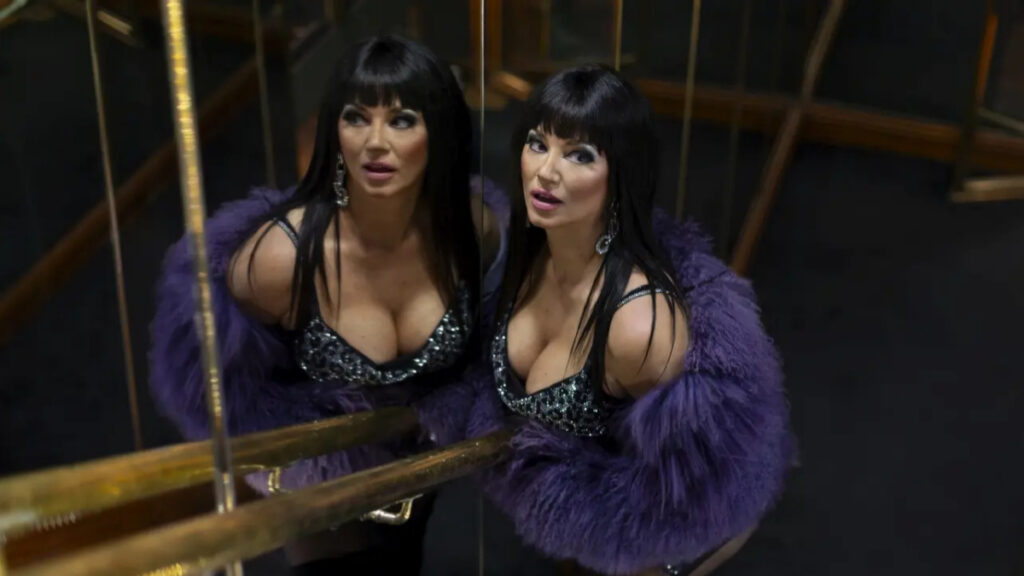
But it is also the point when, in my opinion, the character Moria has some trouble. The series presents quite a number of provocative moments that sometimes seem more like an explanation of the legend of Casán than a developed emotional experience. One of the best things about this book for me is the development of Casán’s public persona. The interaction with Ruben is a good example of this. Ruben wants her to stop doing entertainment, but instead of just giving up on her plans, she goes public against him.
This is the reason why Moria becomes such an interesting person. She not only withstands all kinds of criticism, but she also makes confrontation a part of her performance. The interaction of the character with the queer community also helps to make the character much more interesting than what we would expect from an outrageous personality shown on TV. When there was still a lot of police and social pressure on queers in Argentina, Casán helped people get out of jail and also gave the queer community some visibility with her performances.
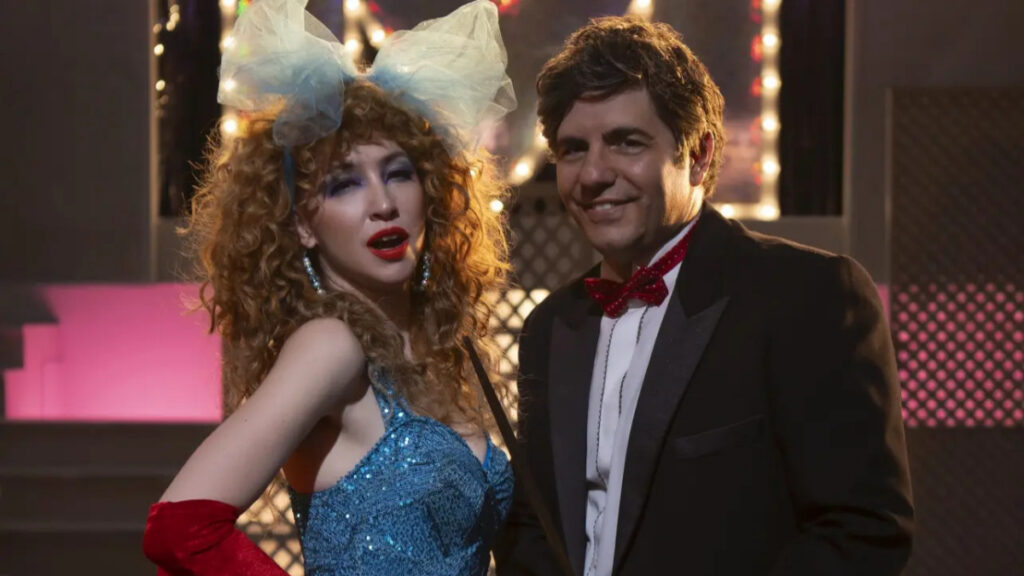
The acting performances are yet another reason why the show works. The actress Sofía Gala Castiglione takes on the challenging task of portraying a young Moria discovering herself. And she accomplishes that well. In contrast to the adult, the younger one is not fully confident about herself. There is a certain trial-and-error process going on when Ana is learning what she wants and how to get the attention that she desires. Casán, the narrator herself, as a character from the present day, brings a new dimension to the show since the real person is commenting on the fictional versions of her own life.
I also think that the story between Moria and Mario Castiglione was more appealing to me than some other romances that appeared on the show. Professional and personal aspects of their lives are entwined, and their split-up is not just a consequence of some betrayal. It is due to a gradual revelation of an imbalance between them as professionals. Thus, it is related to the main theme of Casán’s life since she is able to love people, but she is not letting anyone become more significant than her image of herself.

But the most complex is the relationship between her and her daughter Sofia. It is at this point that my sympathy for Moria significantly faded away. It appears that she treats Sofia as if she is just a representation of herself, forcing her into modelling and show business instead of letting her choose her own way. Sofia has been going through difficult times because of her fame, problems in relationships, and drug addiction, and all she does is judge her. It is awkward to watch, but something I enjoyed about the series.
The biggest drawback is that the Argentinian drama Moria tries to touch on too many topics. It takes eight episodes to do this life, which means many significant moments get compressed along the way. Additionally, the series can be intentionally campy, and not everyone will find this enjoyable. There were moments when I felt the overly dramatic and exaggerated nature of the series conflicted with the realness of the character behind it.
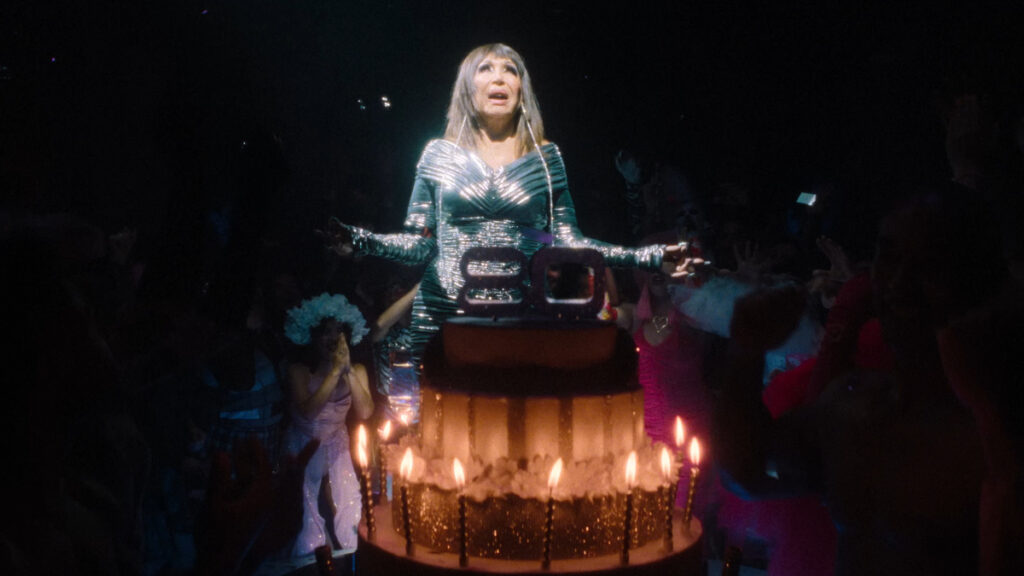
However, there was enough substance here to keep me entertained throughout the series. Moria may not be the best biographical series out there, and I wish that the series would dive into the consequences of certain actions and the relationships more in depth, but the protagonist of this series is definitely an interesting person. The series does show that her best feature was that she knew how to create a spectacle of herself.
Netflix Moria Review: Summing Up
Overall, the 2026 Moria series is at its best when it stops worrying about the next scandalous chapter and concentrates on the woman beyond the façade. It is untidy, thought-provoking, and sometimes frustrating and funny, but it seems appropriate for a tale of a woman who was trying all her life not to be confined to just one role. This show cannot be called a must-see biography, but there is enough information about the characters to enjoy watching it.
