
Vladimir Ending Explained: Directed by Shari Springer Berman, Robert Pulcini, Francesca Gregorini, and Josephine Bornebusch and created by Julia May Jonas, the Netflix erotic psychological drama follows an unnamed literature professor, played by Rachel Weisz, whose life begins to unravel after her husband’s scandal and her growing obsession with a younger colleague, Vladimir, played by Leo Woodall. The series also stars John Slattery as John, alongside Jessica Henwick, Ellen Robertson, Kayli Carter and others.
Vladimir Summary
Netflix series Vladimir’s plot revolves around a literature professor whose name is not disclosed, who is faced with a situation where rumours begin to emerge about her husband, John, a renowned professor accused of having inappropriate relationships with students. However, as the university prepares for a formal hearing in relation to the scandal, she tries to defend him and protect his name, but ends up isolating herself from her colleagues and students.
The attention of the protagonist is then drawn to a charismatic young writer and a new member of the faculty, Vladimir. Initially, she admires him for his talent but ends up developing a fixation on him. However, she is not alone in dealing with problems within her household, as her daughter, Sid, is faced with her own problems. At the same time, the protagonist is becoming more and more fixated on Vladimir as she tries to navigate a situation that is becoming less and less predictable.
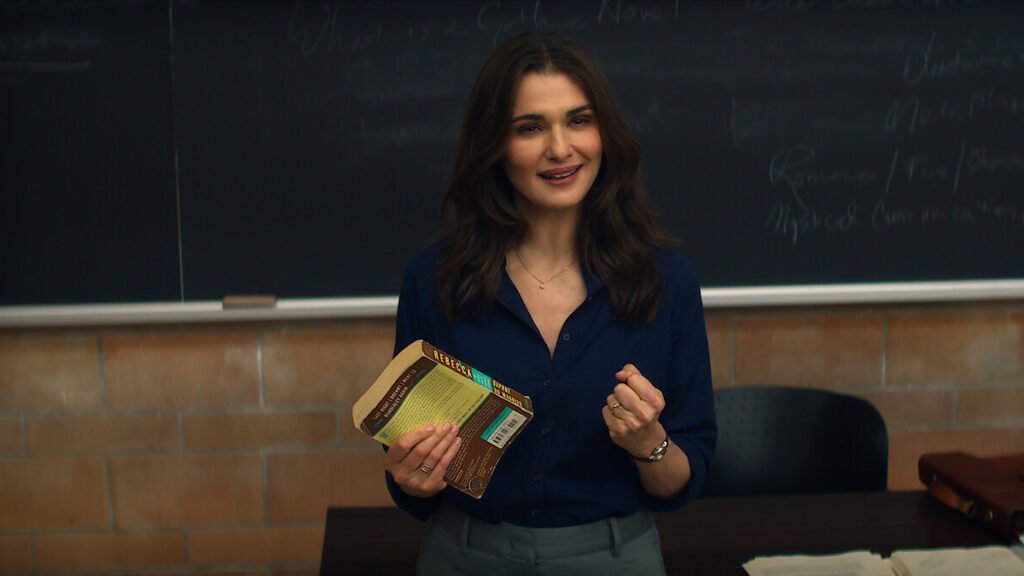
Vladimir Ending Explained
Did the Protagonist Have to Leave Teaching?
The trajectory of her professional life takes a downward turn as the series progresses. Rumours about her husband’s scandal have already begun to taint her reputation, and colleagues and students alike eye her suspiciously because of her unwavering advocacy for her husband. Meanwhile, her behaviour has become more erratic, and her thoughts have become more and more obsessed with Vladimir.
Things take a turn for the worse when a series of incidents occurs. Students complain about how her class discussions have become uncomfortable and too explicit. Some students also claim to have witnessed her and John engaging in inappropriate behaviour outside of school. Eventually, the school decides that her behaviour has become a hostile work environment.

First, she is asked to resign. However, since she refuses to give up her position, a middle ground is taken. Instead of firing her, they decide to place her under supervision. An observer will be present during her classes, and her behaviour will be reviewed regularly. While her employment status is maintained, her independence and authority as a professor are taken away.
What Happened to John’s Case?
John’s hearing is a turning point in the story. Accusations from his former students claim he abused his power to seek a sexual relationship with them. His wife continues to battle for him throughout the story, trying to delay the process so he can retire and still receive his benefits.
The hearing is a revelation of how dark his actions were when compared to how he had initially confessed. Lila, a key witness in the hearing, opens up about how vulnerable she was when she first got into a relationship with John.
Despite these damaging accounts, the final outcome is somewhat unexpected. At the end of Vladimir, we see that complaints against him are dismissed, and he is not punished. He is not allowed to teach at the university again, but he can still draw his pension.

What Happened to Sid?
Sid, the protagonist and John’s daughter, gets dragged into the controversy caused by her father’s accusations. Initially, she is shocked and disgusted by her parents’ open marriage and the mess it has caused. However, eventually, she decides to take up her father’s legal defence during the investigation.
Sid’s decision to become her father’s legal defender is a result of her loyalty and feelings of guilt. However, as the investigation proceeds, Sid realises how messy and dishonest her parents’ lives have been and gets frustrated by how both her parents have been dishonest and manipulative. She also gets annoyed by how her mother intrudes on her life and how her decisions are used by her mother as a plot for her next story.
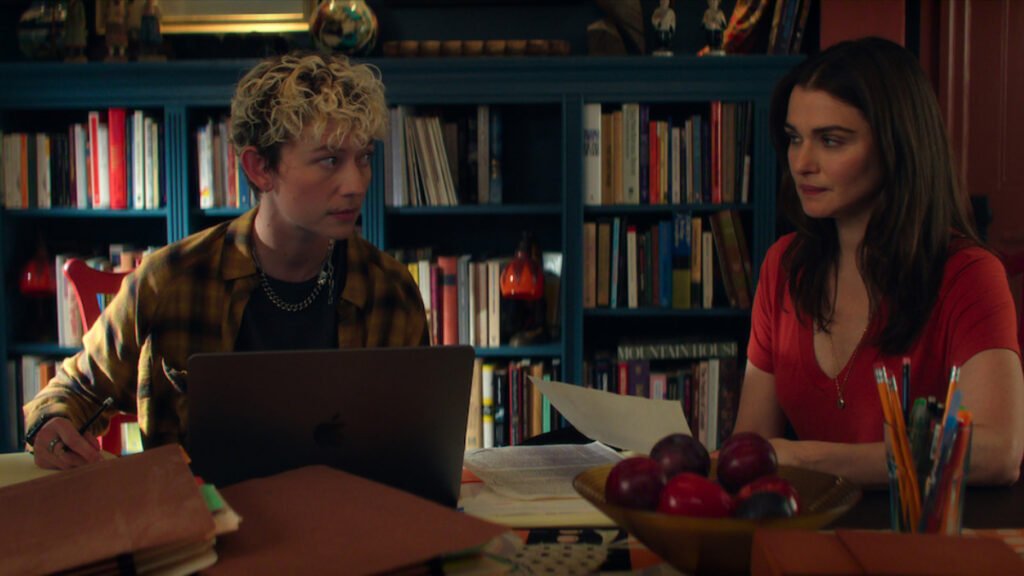
The ending of the Vladimir series reveals that Sid eventually distances herself from both her parents because of her feelings of shame and exhaustion, and decides to create a life of her own.
Did the Protagonist Fulfil Her Desire for Vladimir?
Mostly throughout the series, she envisions Vladimir, the man played by Leo Woodall, as a type of dream she continues to replay in her mind. She is a woman immersed in fantasies where her work relationship with him develops into something more romantic or even intimate.

However, the day of John’s hearing arrives. She decides to miss the hearing and instead meets up with Vladimir for lunch. She then drives him to her secret cabin in the woods. While initially engaged in a conversation, she puts something in his drink and holds him while he is unconscious.
As things ease up between them and she is still holding him in her secret cabin in the woods, she and Vladimir become even more intimate. He tells her he has had feelings for her for a while now. They then finally have sex. At long last, her fantasies have become a reality. However, the situation does not appear to be a romantic fulfilment but a climax of her obsession.
Also Read: Young Sherlock Review: Youthful, High-Energy Mystery That Mostly Delivers
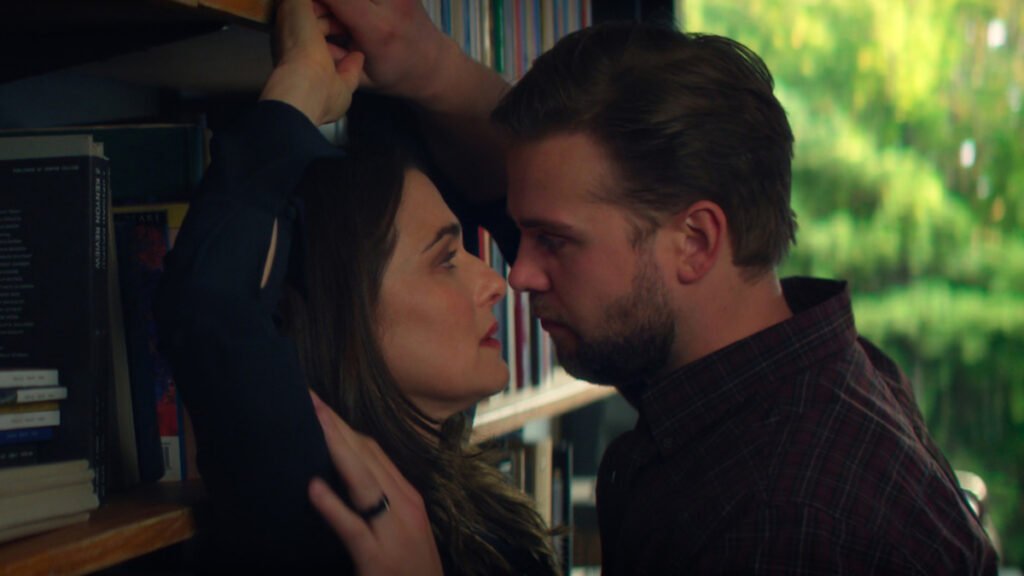
Were Cynthia and John Really Having an Affair?
No, there was no actual physical affair, even though the protagonist believes this to be the case from the beginning. This story is from the point of view of the protagonist, so we tend to believe what she believes rather than the actual reality. She sees John and Cynthia together and immediately believes they have had an affair. Her jealousy and lack of confidence in herself lead her to believe this.
However, when the truth is revealed, it is nothing like this. John had been helping Cynthia with her work. Cynthia, who has had a history of addiction, had taken a small amount of medication to help her concentrate on writing. This creates tension, especially with Vladimir, since Cynthia’s history of addiction creates tension and emotional situations. There is a sense of betrayal and secrecy, but nothing like an affair.

Was the Protagonist Able to Finish Her Book?
Yes, she finally finishes the book she had struggled to write for years. At the beginning of the series, writer’s block had her in a tight grip, and nothing of great significance had been produced in over ten years.
Ironically, her obsession with Vladimir is what rekindles her creativity. As she continues to fall for him, she comes up with a new idea for a book, a mature woman in love with a much younger colleague. After their night in the cabin together, she is suddenly clear on how she wants her book to end.
She spends that night writing furiously on several legal pads until she finishes her book. She says in an interview that she had published her book and that it had been even more successful than Vladimir’s book.
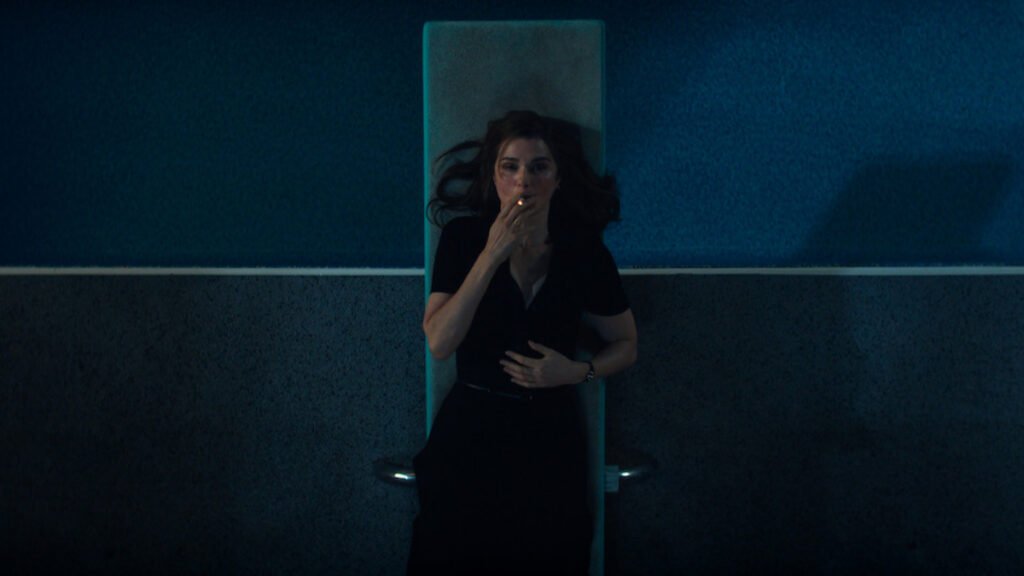
How did the Fire Start in the Cabin, and What Happened to John and Vladimir?
At the end of the story, a fire occurs at the cabin where everyone is asleep. The origin of the fire remains unclear, which makes the suspense of the ending all the more ominous.
When the protagonist realises the fire, she faces an important decision. Rather than immediately trying to save the two men from the fire, the protagonist runs to retrieve the notebooks. These represent the work that the protagonist finally completed after so many years of failures. Inside the cabin, John and Vladimir are trapped when the back door will not open. She leaves the scene and watches as the cabin burns. The protagonist holds onto the notebooks.
In the Netflix series Vladimir ending, the protagonist claims that she called emergency services. She also claims that the two men survived the fire. However, the story is from the protagonist’s point of view. We know that the protagonist is an untrustworthy narrator.

Why Is the Protagonist Never Given a Name in the Vladimir Series?
One of the most interesting things about the story of Vladimir is that the central character, played by Rachel Weisz, never really gets named within the narrative itself. She’s always “M” or “the protagonist” even within official promotional releases for the show.
By refusing to name the character, the show encourages us to believe that the character herself is not reliable, that her sense of self is slippery. Much of what we know about the plot of the story comes through her eyes, and she often controls the direction of events based on her own fantasies, interpretations, and narrative sense of what’s happening. She’s also a writer who can’t seem to finish writing her novel, which may be part of the reason why what we know about her may be part of what she’s writing.
But there’s another level on which the refusal to name the character makes sense, both within the themes of the narrative itself and within what the narrative is trying to say about the character. The narrative itself is less about the character than about the themes she represents, themes of age, desire, jealousy, control, and so on.

The character becomes less of a traditional television hero and more of the sort of character you might find within a traditional literary narrative. The narrative also encourages us to believe that what we know about the plot of the story might be skewed by the character herself, since she does go on to create a narrative about her obsession with Vladimir.
