

Mousetrap Review

Director: Kim Hong-seon
Date Created: 2026-08-28 19:56
3.5
Mousetrap Review: Directed by Kim Hong-seon and screenwriting is done by Lee Jae-gon, the Netflix K-drama 들쥐 is adapted from Ludvico’s webtoon Field Mouse and stars Ryu Jun-yeol as Je Moon-jae, Sul Kyung-gu as Noja, and Lee Kyu-hyung as detective Park Soon-yong, alongside Kim Sung-oh, Hyun Bong-sik, Moo Jin-sung and others. The drama has 10 episodes, each with a runtime of 50-55 minutes.
Mousetrap Review
Netflix Korean drama Mousetrap starts by describing how Moon-jae, a highly successful but very shy novelist, has managed to keep control over his entire life for many years. He does not go out of his apartment much, lives a tight schedule and suffers from very strong anxiety, resulting from the traumatic experiences of his childhood. However, all that safety gets broken when suddenly he finds out that neither his phone, nor his bank accounts, nor his house, nor his identity recognises him anymore.
Also, he turns out to be targeted by Noja, a gangster, who thinks that Moon-jae is associated with some money-related crimes that were concealed from him. While Detective Park is investigating some mysterious deaths and starting to pull the strings, Moon-jae realises that something much more serious is happening to him.
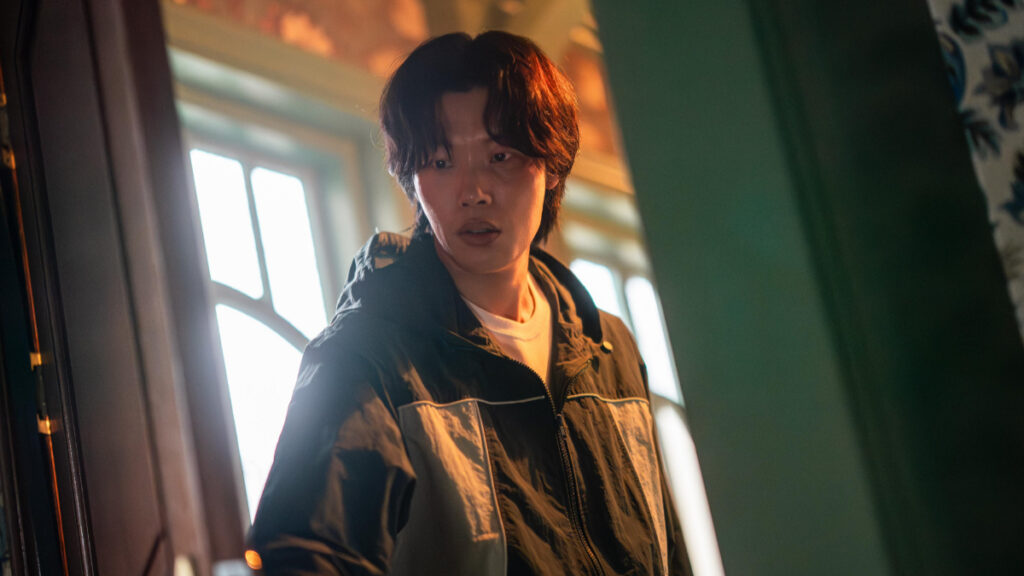
In my view, Ryu Jun-yeol is among the primary elements that make Netflix’s Mousetrap such a success. Instead of being portrayed as a simple frightened man who is always on the run, Moon-jae’s fear has a physical manifestation due to Ryu’s portrayal of him. Right from the time that Moon-jae finds himself removed from the comfort zone he has created for himself, I could sense just how scary the world is for him. It is not just a case of him being chased and thus feeling afraid of it; rather, he has been building himself a life where every aspect of the day is predictable and controllable, but now the system fails to recognise him.
One of the things I enjoyed about this Netflix series Mousetrap was seeing Moon-jae put into scenarios that any normal person would fear, but which become scarier through his anxiety. For instance, imagine finding out that your fingerprint won’t work anymore on your own bank application, having gone somewhere where you expect people to recognise you, only to realise that even your own identity has been completely rewritten. Moon-jae’s desperation makes a lot more sense when he is constantly stripped of all forms of security.
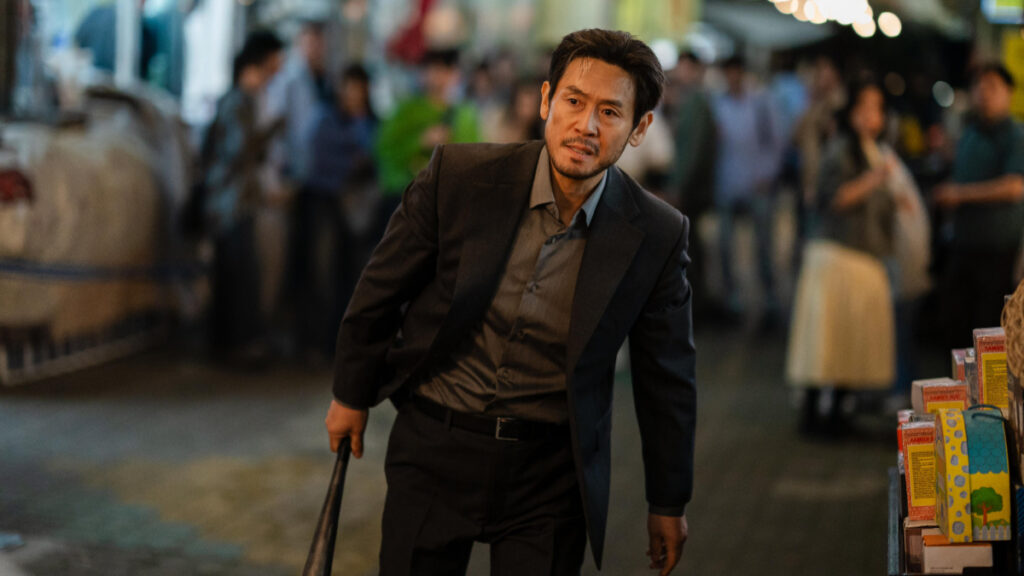
Another thing that is interesting about Moon-jae is that he has a double. Moon-jae finds himself not just trying to figure out what is controlling him, but how well he knows his own past. The best thing about the dynamics between the characters is how unexpected the cooperation between Moon-jae and Noja is. To start with, the reason for this trust on both sides seems to be completely non-existent. Noja hates Moon-jae, and indeed, he has all the reasons to do so. For Noja, Moon-jae is involved in some kind of situation that has caused him many troubles, and there is no reason for him to trust the frightened novelist’s stories.
That is why I find it interesting how eventually Moon-jae finds himself needing help from Noja. Their relationship does not turn into one of mutual warmth and trust. There is still tension, mistrust, and an imbalance between the characters. Moon-jae needs Noja because Noja can survive in situations that Moon-jae cannot. Noja, in turn, needs Moon-jae because of the mystery of his identity.
It was enjoyable to watch the way practicality slowly brought them into contact with each other. While Noja may come off as the physically dominant one, he’s not totally without Moon-jae in terms of use. It helps their dynamic if the show realises that neither is doing anything for the sake of caring about the other. They work together because it serves their interests. The intensity Sul Kyung-gu adds to Noja is something else. He can threaten without resorting to violence, unlike Moon-jae, and he changes the dynamics of the story.
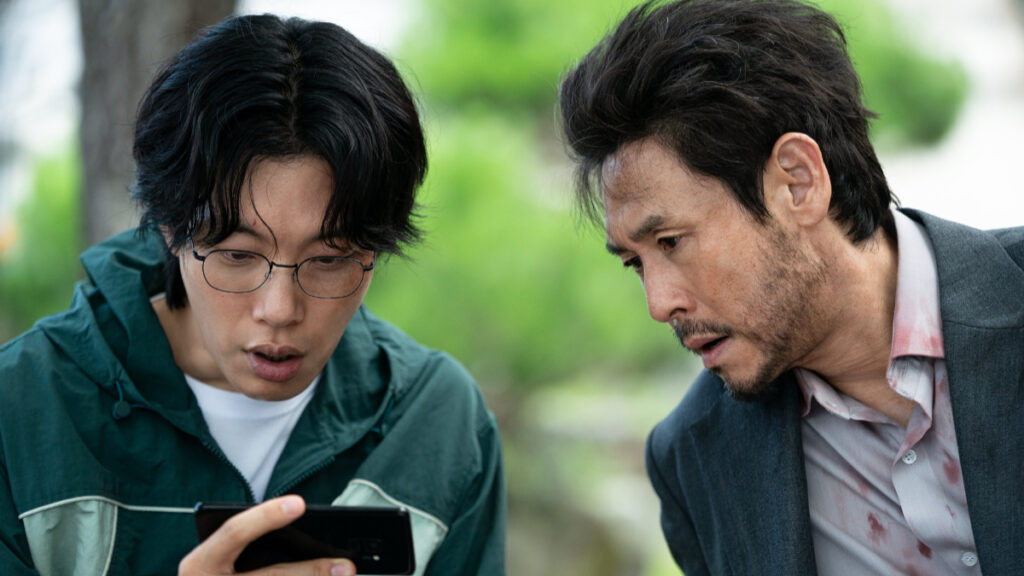
However, it is the identity puzzle that keeps me fascinated with this work and, at the same time, causes problems for the series as well. The theme of this story is really intriguing to follow. Imagine the situation where not only other people but also all technologies, the financial system and even official documents say that your identity does not match your real self. Moon-jae is deprived not just of some of his belongings. Instead, he finds his whole identity put into question.
It is also very interesting how this theme is connected to the Korean tale about a rat that gets human characteristics from eating fingernails of a person. The identity puzzle in Netflix kdrama Mousetrap is presented from the perspective of the ancient folklore tale in the context of modern times with technologies and identity manipulation.
However, there are times when the series starts paying too much attention to keeping secrets from viewers. It was at times when the need for another twist arose not because the plot required it but just because it could happen. Most twists work, but together, they might result in a more complicated storyline than necessary.
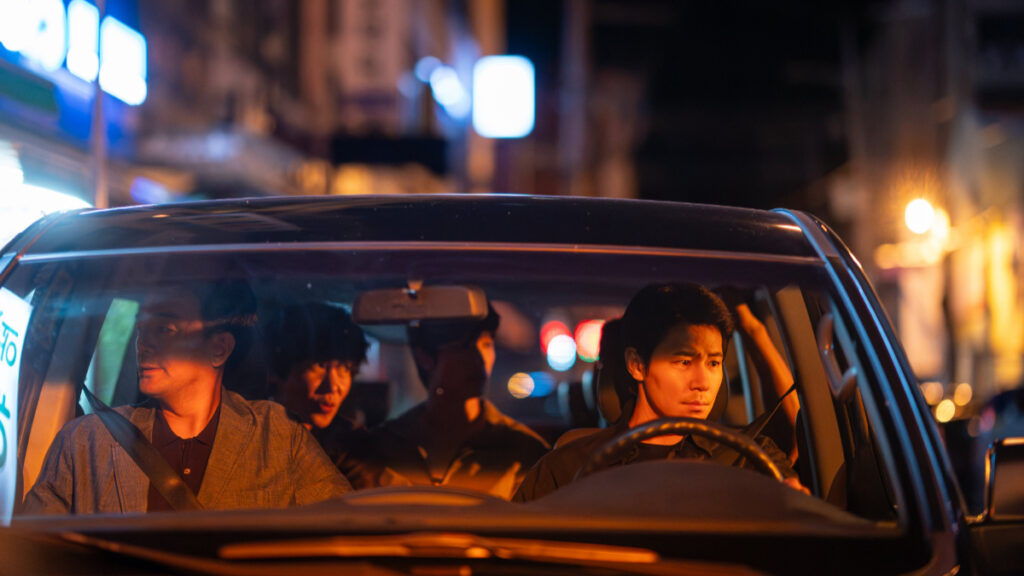
It was also a case of some characters getting a bit less screen time and development as Moon-jae and Noja get the most attention, although it would be good to know more about their lives not just in connection with the mystery but on their own. The role of trauma in Moon-jae’s personality is significant, although it sometimes looks like a means to create frightening visuals.
Detective Park’s storyline also has room for development, considering the fact that Park is solving the mysteries while at the same time dealing with personal issues in his life. Unfortunately, however, I do not believe that his story received the same weight as the main plot since there have been times when he came across as just one of the pieces that the story needs but does not necessarily add anything special as a character. This is a shame since Mousetrap has ten episodes to create characters that can really become believable and three-dimensional.
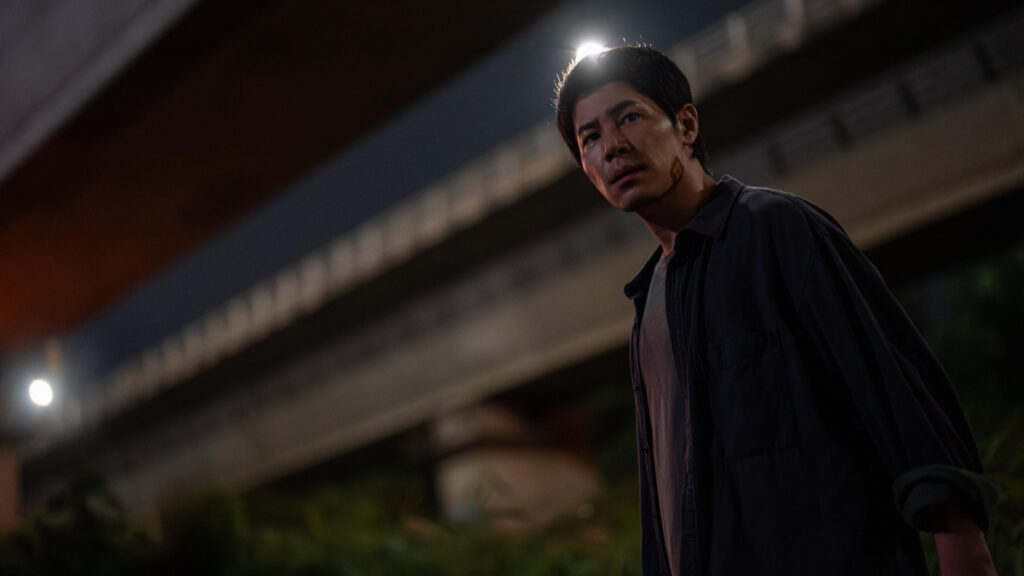
As for the visuals in the movie, it is fair to say that Kim Hong-seon’s direction created the right atmosphere for the thriller since he created a cold and uneasy environment. In addition, there have been times when the unusual angles and the disturbing images helped to show that everything is definitely not right. On the other hand, it has also been the director’s fault that he slowed the pace of the story to the point where it became quite frustrating at some points.
Netflix Mousetrap Review: Summing Up
Overall, Mousetrap is definitely an excellent psychological thriller show, which has an intriguing concept, some great performances and an especially interesting couple in Moon-jae and Noja. I feel like the performance of Ryu Jun-yeol depicting the character of Moon-jae’s fear is probably the best in the whole series, although Sul Kyung-gu is quite menacing as Noja.
However, my main problem with the series is that it sometimes confuses complexity with depth. As the series’ mystery becomes wider, it becomes harder to be emotionally invested in what is going on. Some of the characters needed more screen time, and some scenes were paced very slowly. Despite the issues, I still believe that Mousetrap deserves to be seen by anyone who is a fan of such dark thrillers in Korea.
