

Final Project Review

Director: Felipe Aguilar D.
Date Created: 2026-07-29 20:34
1.5
Final Project Review: Directed by Felipe Aguilar D., Netflix’s Mexican micro-drama Proyecto Final stars Daniela Martínez Caballero as Tamara, Tristán Maze as Xavi, Ian Sparrowe as Pato, Isabella Tena as Samantha, Virgilio Delgado as Daniel and others. The drama is spread across 20 short episodes, each with a runtime of 9 minutes.
Final Project Review
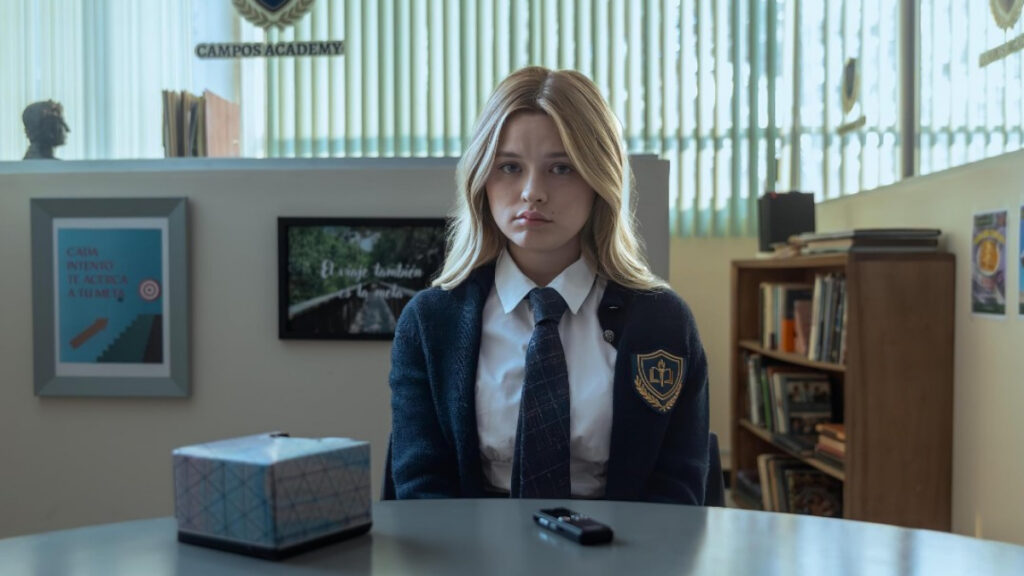
Netflix’s Final Project tells the story of Tamara, a shy girl with a gothic personality who has trouble fitting in at a school where superficiality is the primary measure of a person’s value. Tamara starts seeing herself in a different light once Xavi, one of the most popular boys in school, falls for her.
However, the story quickly takes a dark turn since, on top of being bullied, betrayed, and faced with painful memories from the past, Tamara finds herself with many secrets of her own and changes her identity altogether, determined not to be the easy target she used to be. Even though the concept of the show had everything needed to make an intriguing teen thriller, the show itself treats it rather carelessly and with exaggerations.
However, the main issue I have with the Netflix series Final Project is that the plot never stops moving, but at the same time it seldom seems to be advancing logically. Every episode brings new secrets, suspicions, or twists, but the series hardly has any time to explain how the characters got into that particular situation. At first, Tamara has to cope with the cruelty of her schoolmates, and then everything changes again.

Had the short time been used to emphasise only one point, this could have made it work. Tamara’s story of being bullied and her wish to take back her life could have been an ideal start. But what is being done now is just piling up new problems, making the story too crowded. There is romance, envy, rape, revenge, masked identity, corruption, and other criminal acts all being piled up, but none of them is explored enough to make them mean something.
The end result was a show that had the feeling that some chapters just didn’t happen. This could include characters making decisions out of nowhere or trusting someone they shouldn’t be or becoming paranoid without any prior foreshadowing. All I could do was wait for those scenes to come, but the show already went to another one.
What made me find Tamara’s transformation into Violetta even more difficult to take seriously is the fact that the show considers a simple hair and makeup change to be an absolutely believable identity transformation. Tamara does not do much except change her appearance, and yet, no one recognises her as Violetta. It really made me raise an eyebrow at the show since it makes you believe that the people who know Tamara on a daily basis can no longer recognise her just because she changed her appearance.

The idea of Violetta could have been successful. After experiencing relentless bullying, betrayal, and manipulation, it would make sense that Tamara chooses to create a stronger version of herself in order to end her life of constant fear. Yet the series fails to properly address this emotional evolution. Instead of showing the psychological impact that Tamara’s experiences have on her, the series makes use of her physical transformation and depends on that entirely. This makes Violetta less of a character and more of a badly made disguise that is accepted by everyone in the story for the sake of the plot.
What I wanted from this Mexican micro-drama Final Project was to get to know Tamara behind all that was happening to her. I was interested in seeing how Tamara’s past influenced her actions and why she thought she had no choice but to become Violetta. What I got instead is a constant emphasis on surprising the audience.
The other significant element in the plot is the connection between Tamara and Xavi; however, I could not relate to this one either. The romance is intended to cause some drama as Xavi’s affection for Tamara arises in a rather dubious manner. However, the development of his character goes so fast that he seems hard to comprehend.
Sometimes, Xavi seems truly attracted to Tamara, but sometimes his behaviour makes one wonder about how reliable he is. This could have been an intriguing character, yet the author failed to develop his motives in a convincing manner. It seems that rather than focusing on their believable interaction, the writers decided to make him suspicious.
While Samantha and Pato are portrayed as major sources of conflict, the characters are not developed with much depth at all. Their ruthlessness is clear right from the start, but there is not much in the way of personality that is developed beyond the idea of being someone who makes Tamara’s life miserable.
However, Daniel might be the most bizarre case when it comes to the need for this Mexican series Final Project to come up with unexpected twists. The fact that he was constantly filming something in order to complete some kind of project makes him an interesting but still friendly character. But the more we get along with the series, the more mysterious his camera becomes, and the more events associated with him are not connected with previous episodes of the story at all.
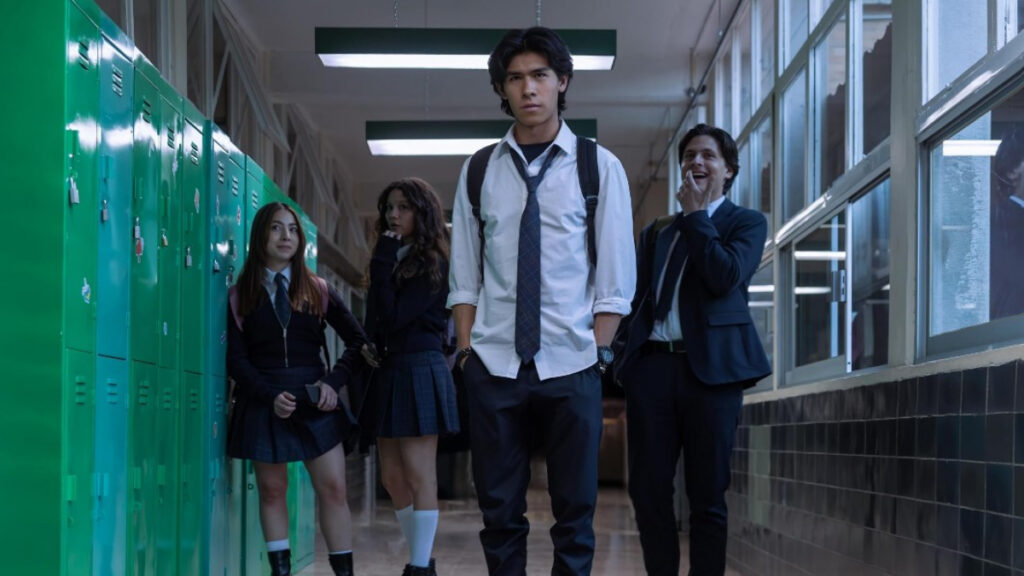
However, the performances of the Netflix Mexican series Final Project fail to give dimension to poor material as well. Daniela Martínez Caballero attempts to portray the emotional development of Tamara; however, poor writing leaves her with not much time to slowly develop Tamara’s suffering. This is the same case for the other actors in the film who are given poor dialogue and relationships with no emotional substance.
Netflix Final Project Review: Summing Up
Serious topics abound in this 2026 Final Project series; however, they are treated rather superficially and considered only temporary barriers before getting to the next twist in the plot. Tamara’s metamorphosis, her romance with Xavi, the bullying at school, and Daniel’s peculiar filming could be the basis for a good storyline had the show taken its time and developed the characters. Instead, I have seen a sequence of dramatic events that have nothing much in common either logically or emotionally.
The brevity of the episodes makes it possible for the viewer to complete the whole season, but it also reveals just how little has been done between those major plot points. The number of twists in the plot becomes really tiring by the end of the season.
