

Pro Bono Ending Explained: Directed by Kim Seong-yoon and Baek Sang-hoon, with a screenplay by Moon Yoo-seok, the 12-episode Netflix K-drama is led by Jung Kyung-ho in the role of Kang David, alongside So Ju-yeon, Lee You-young, Yoon Na-moo, Seo Hye-won, Kang Hyung-suk, Choi Dae-hoon, and Kim Gap-soo. The series 프로보노 blends legal drama with sharp social commentary.
Korean Drama Pro Bono Recap
The Pro Bono kdrama starts off by presenting Kang David as a superhuman being of sorts in the judiciary who is exceptionally clever, merciless, and admired by the crowd for his uncompromising stance against difficult to powerful criminals uncompromising stance. All the same, behind this reputation is a man who is insecure and wants to get away from his poor past. David does not just want justice but also the very highest, and that even if it is through corruption rather than confrontation, he will still be seen as the one up there.
His life undergoes a drastic change when he gets implicated in a bribery scandal beautifully crafted by people he had trusted, thus his quitting is unavoidable since the whole thing would come to light eventually. The judge who used to rule the courtroom a night is demoted to the position of public interest lawyer in a failing pro bono team, starting all over again.
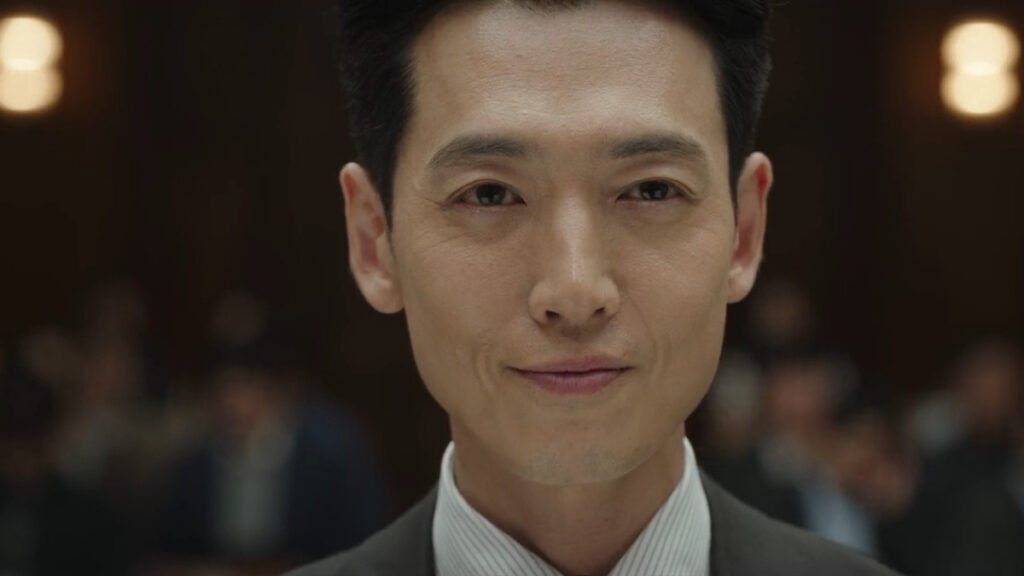
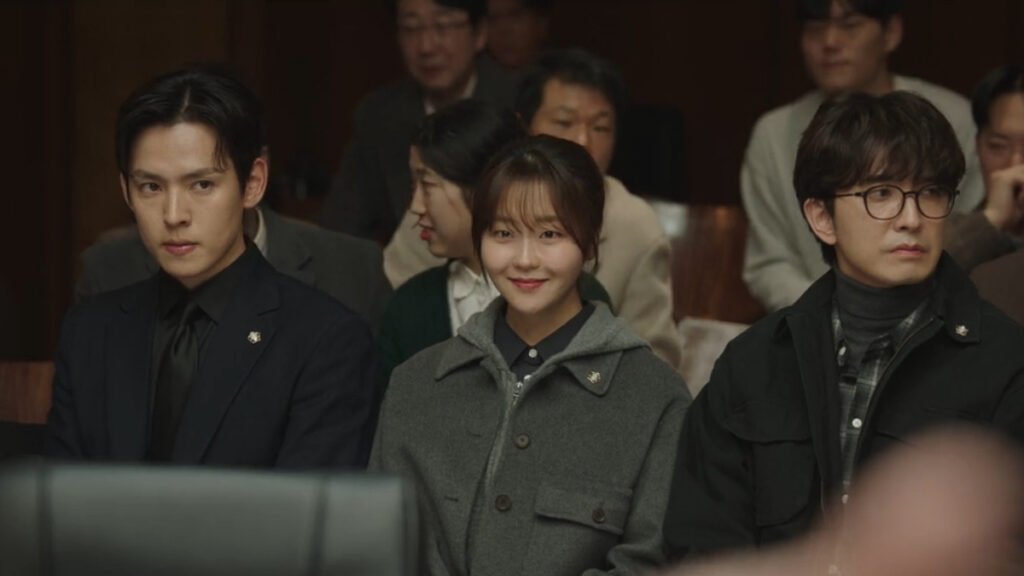
David’s adjustment to the disgraceful series focuses on the morally complex cases involving vulnerable clients, and the stark contrast between idealism and reality in the legal system is exposed. His uneasy partnership with Park Gi-ppeum, a principled but naive lawyer, gradually becomes the central topic of the story, where David’s cynical perspective is challenged. While he uses brilliant strategies to manipulate cases, Gi-ppeum, the good lawyer by virtue of her innocence, pushes him to be more humane and responsible.
With time, David not only has to deal with the conspiracy that brought him down but also the psychological trauma that he has kept hidden for a long time. By dealing with cases touching on abused children, marginalised communities, and public figures caught in scandal, Pro Bono has turned into a complex theme of justice, questioning whether redemption consists of winning cases, winning back the power, or simply choosing integrity over ambition.
Pro Bono Ending Explained
Did Kang David Defeat Oh and the Corrupted Justice System?
David’s ultimate courtroom triumph seems to be very decisive. The whole conspiracy that involved the Chief Justice Shin, the Chairman Jang, and Dr Oh gets public exposure, and this in turn dismantles a network of influence that had been in existence for a long time and was manipulating verdicts, careers, and even lives. David forces the conspirators to confront one another, which allows paranoia to split their alliance, and he thus uses the system’s weaknesses against it. This is not just a victory of strong evidence but also of a very fine psychological manoeuvring exercise.
Nonetheless, Pro Bono is careful not to present this as the very end of the corruption. Oh is in a tight spot but not completely gotten rid of. The system is put to the test, but it is not outright defeated. What David accomplishes is making the system accountable in front of the public, rather than bringing about reforms in the system. The whole situation makes it very clear that corruption is still around because it changes its ways, and that such victories are very few because of the very high price someone has to pay in terms of personal future for the victory to be achieved.
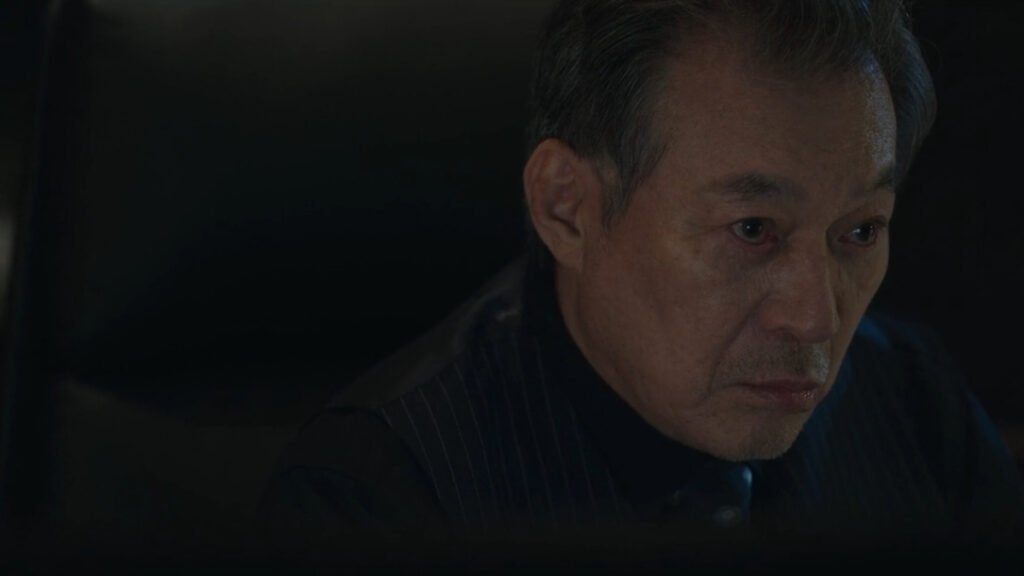
Thus, David’s win is more of a symbol than a reality. He shows that corruption can be put to the test, but at the same time reveals how fragile justice can be if it is not backed by the integrity of the structure but instead depends on exceptional individuals.
Does Kang David Finally Get Justice at the End of Pro Bono?
Kang David does, in fact, get justice—but not in the exact way he originally asked for it. At the series finale, he has successfully uncovered the conspiracy between Chief Justice Shin, Chairman Jang, and Dr. Oh, thus exposing their long-term manipulation of the judiciary. The judge’s ruling not only clears David’s name but also proves that he was the victim of a plot, thereby restoring his professional reputation after a public disgrace. From the legal aspect, this is an overwhelming victory.
Also Read: To My Beloved Thief Episode 1-2 Review: Slow-Burn Romance Wrapped in Secrets and Legend
Nevertheless, Pro Bono purposefully portrays the justice that is confined within the courtroom as being only partial. David understands that even though he can overpower individuals, the system that empowered them still exists to a large extent. The corrupt alliances are merely shaken, not obliterated, and the power distribution changes in favour of some, but it does not simply vanish. This understanding is vital to the comprehension of David’s psychological condition at the conclusion—he is justified, but not satisfied.
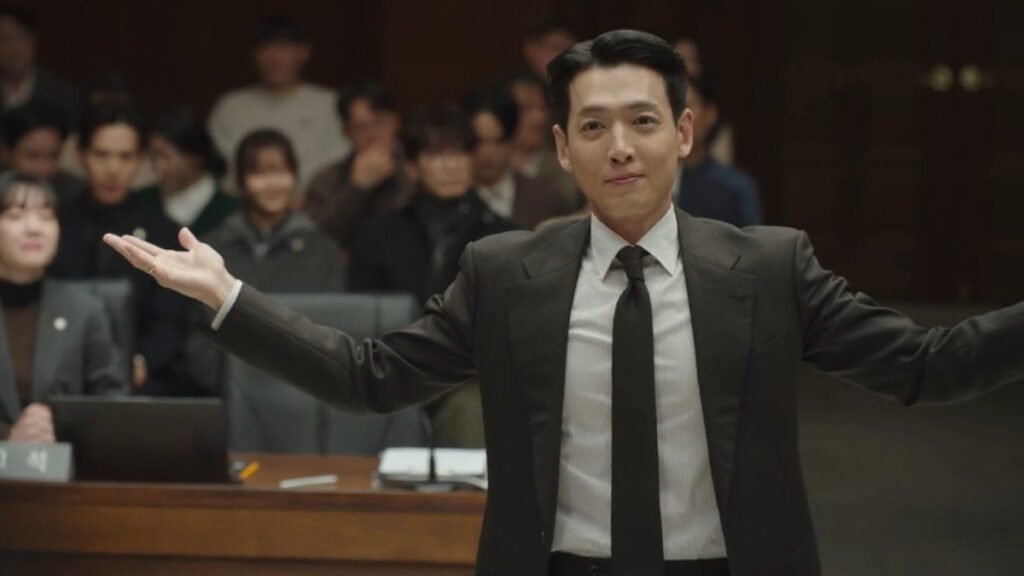
In the Pro Bono end, David’s justice is more personal than an institutional one. He liberates himself from the feeling of guilt, the hostility and the hopelessness that once held him captive. By not relying on the validation from the very same system that has already betrayed him, but rather by following his own moral path, David manages to acquire a deeper, more significant form of justice.
Why did Kang David Reject the Chief Justice Position?
The emotional core of the finale is represented by David’s rejection of Oh’s offer. All through the series, the vision of becoming Chief Justice was the only thing that David managed to associate with his existence, that is, power, dignity, and proof that a boy from nowhere could rise over those born with a silver spoon. The appointment would probably be interpreted as the fulfilment of his mom’s last wish—at least on paper.
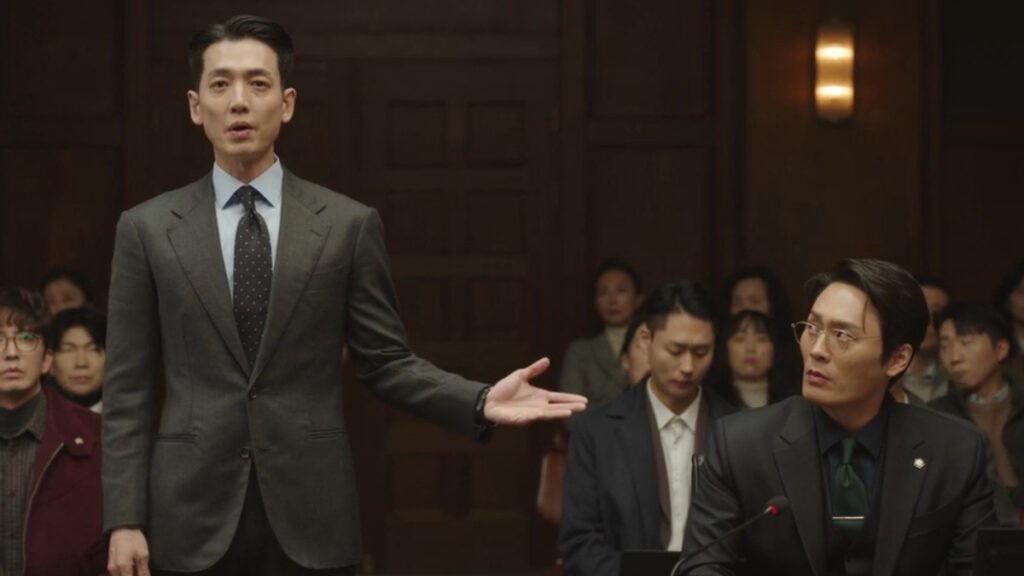
But the moment he is at his mother’s grave, he has to see the bitter fact: her ambition was never about a title. It was about David then to survive with the quality in a world that would not mind wiping out people like her. The Chief Justice position offered by Oh is tainted, not just in morality, but also in its being. Accepting it would imply that the law only favours those who sell their souls, regardless of how righteous they were at the beginning.
By turning down the offer, David finally liberates himself from the insecurity that has been haunting him since childhood. He does not need to have his success recognised by the institutions, which are based on silence and complicity. In his refusal of power, David attains something much more precious: the ability to define himself.
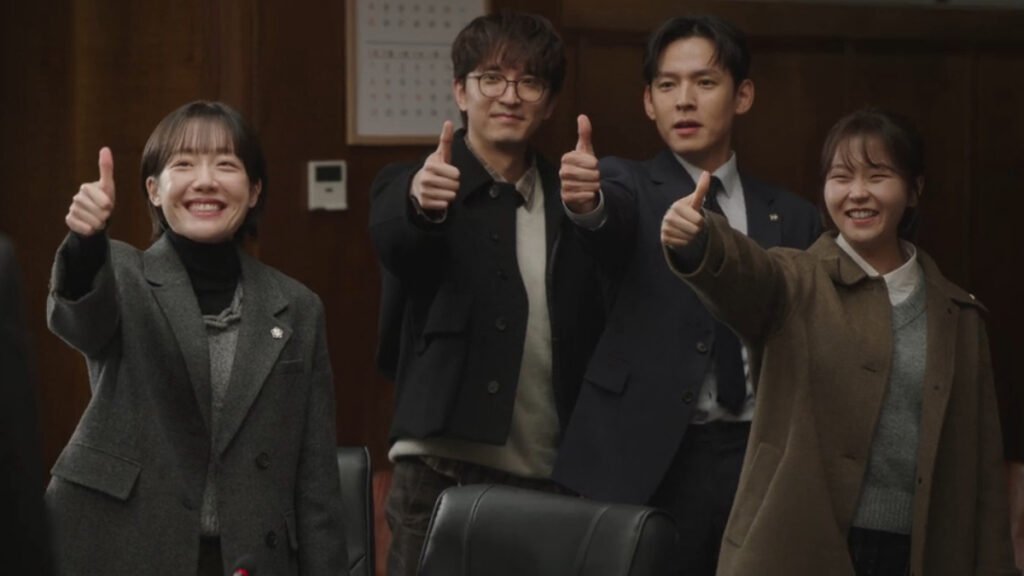
What Happens to the Public Interest (Pro Bono) Team After the Final Trial?
After the concluding trial, the public interest team is faced with a dilemma. They have lost their original pro bono office, their institution had turned its back, and David had no more ties within the firm’s hierarchy. For a short while, it seems that the team’s goal and destiny have been destroyed together with the system they were opposing.
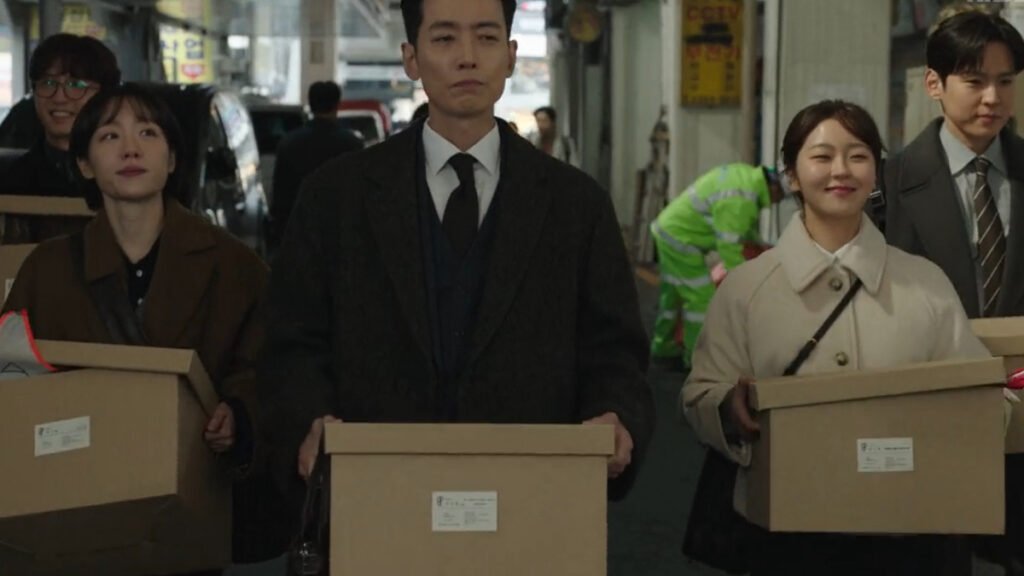
However, the ending turns this loss into a gain in terms of freedom. They prefer to go with David into a new phase rather than staying tied to a law firm that could easily and quickly shut them down. They leave Oh & Partners together without the burden of corporate politics and the façade of “public interest” branding. This choice indicates progress: they are not naive novices anymore but rather attorneys who know the price of justice.
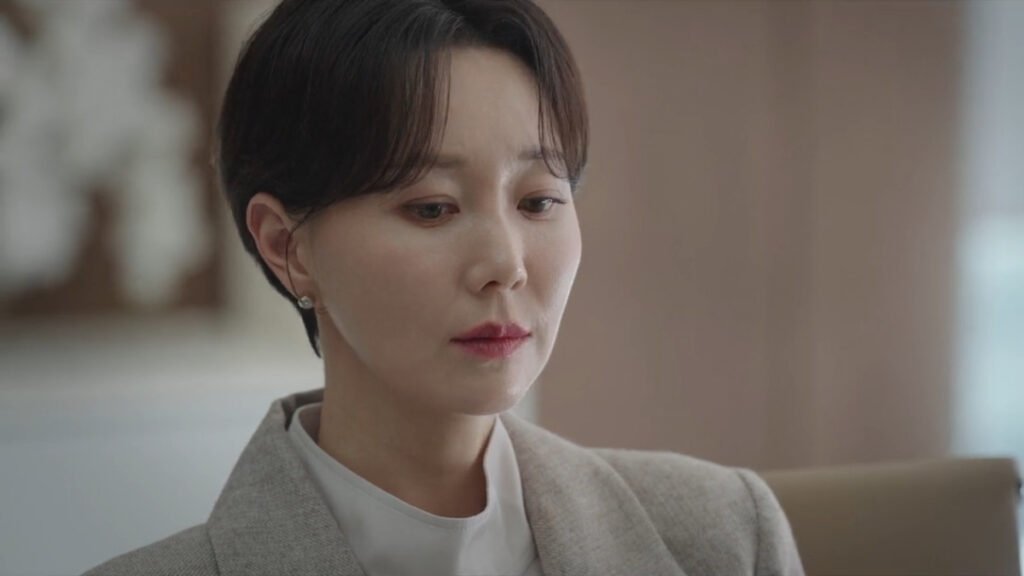
By moving to David’s new firm, the team not only preserves its fundamental principles but also acquires freedom of action. They are still defenders of the downtrodden, only now they are doing it their way. The conclusion implies that the pro bono team as a formal body may cease to exist, but its ethos is still there and has even changed for the better.
What Is Pro Bono kdrama Ending Ultimately Saying About Justice and Power?
The Korean drama Pro Bono states that justice is not a universal and unchangeable moral value but a battlefield. The law, as depicted in the series, is not particularly virtuous or sinful by nature; it indicates whoever has its power. The powerless either have to surrender or find out how to combat using the same weapons.
The conclusion does not present a nice and easy moral answer. David is not forgiven, Jung-in is not punished, and the system does not get reformed in one night. Rather, the drama implies that significant change occurs slowly and gradually, sometimes through morally uncomfortable choices of deeply flawed people. By ending on David’s survival instead of victory, the drama gives the audience an uncomfortable but honest conclusion: justice is not about being good; it is about not disappearing. And sometimes, being visible is the most radical thing to do.
