

Je m'appelle Agneta Review

Director: Johanna Runevad
Date Created: 2026-04-29 23:58
4
Je m’appelle Agneta Review: Directed by Johanna Runevad and adapted from Emma Hamberg’s novel, this Swedish drama has a runtime of 1 hour and 53 minutes and stars Eva Melander as Agneta, Claes Månsson as Einar, alongside Jérémie Covillault, Anne-Marie Ponsot, Björn Kjellman, Richard Forsgren and others.
Je m’appelle Agneta Review
Netflix movie Je m’appelle Agneta draws you in to experience the banality that defines Agneta’s life. She is a woman well into middle age, who appears to have become invisible to herself. Her relationship lacks any kind of emotional intimacy, her children see her as nothing but an insurance policy, and the everyday actions she performs only serve to remind her that she is merely existing. The film succeeds wonderfully in making the viewer understand the sense of emptiness in her life from the beginning.
Her life changes for the better once she is fired from her job; however, what would be seen by some as catastrophic turns out to mark the start of a new chapter. Instead of being completely overwhelmed, Agneta decides on an impulse to take up employment in France, in Provence. The beauty of the film lies in the fact that this movie does not look like a spectacular departure from normality.
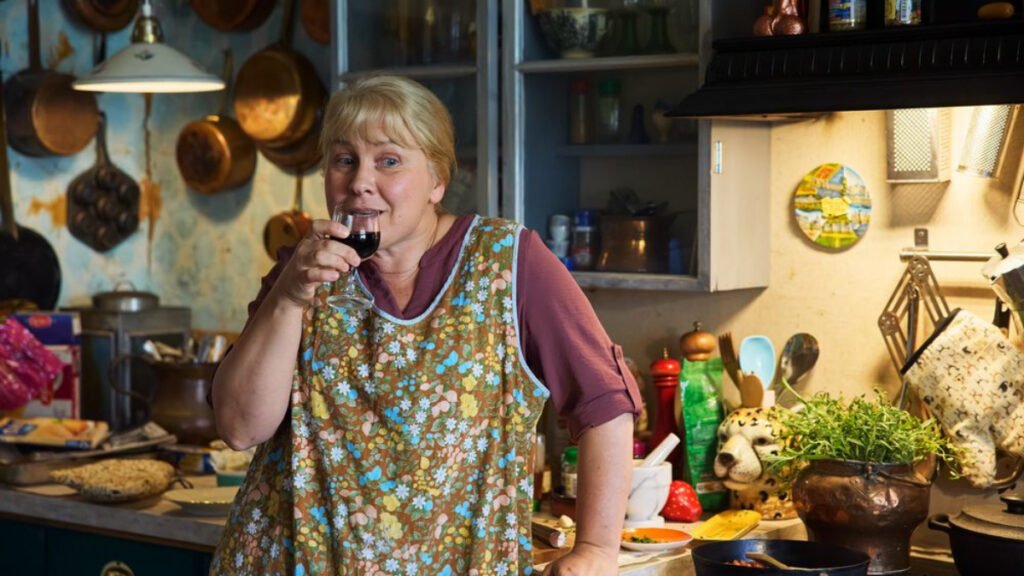
However, her life changes significantly when Agneta comes to France, only to realise that the job which she applied for is not what she thought it would be. Contrary to popular assumption, she is supposed to take care of Mr Einar, an old man who lives in a very big and messy house and obviously does not require anyone’s help at all. In fact, both their first few encounters prove to be quite embarrassing and awkward for both parties.
That’s when things begin to loosen up for Agneta. As she stays longer in Provence, her personality, which is very rigid and tightly controlled, begins to loosen up a little by little. This change is shown in an indirect way in the film. Eating together becomes a significant point. Conversing together becomes a revelation. It’s these interactions that eventually tear down all their defences.
However, the background of Einar is one more aspect which enriches the storyline of the movie. His character raises issues related to regret and lost contacts. Einar’s life was authentic enough, although it resulted in many sacrifices, especially concerning his contact with his son. While it may not be specified, the connection between these two lines of storytelling makes the plot more complete. The theme not only touches upon discovering happiness again, but also the aspects we tried to avoid before.
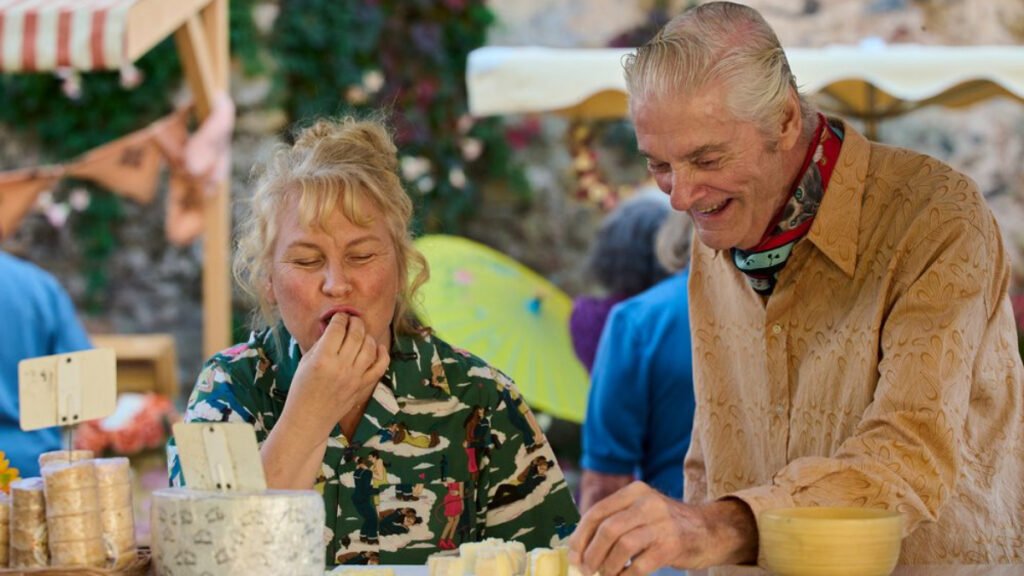
At the same time, Agneta’s own character development gains shape. One of the most compelling narrative elements in the movie lies in its ability to convey her struggles in trying to talk about herself. Initially, every time Agneta talks about herself, she ends up talking about other people, such as her husband and her children, as if there was nothing about her that could be interesting. It says so much about what kind of person she has become over time. Therefore, watching her make decisions for herself and experience things previously unknown to her feels rewarding.
Some side characters in Provence are brought into Netflix’s Je M’appelle Agneta to aid in the development of Agneta. The relationship between these individuals is simple, but it serves to further stress the point that it requires moving away from your usual surroundings and encountering people who do not know you to see the real you. The freedom felt by Agneta in existing within this new world is exploited by the storyline.
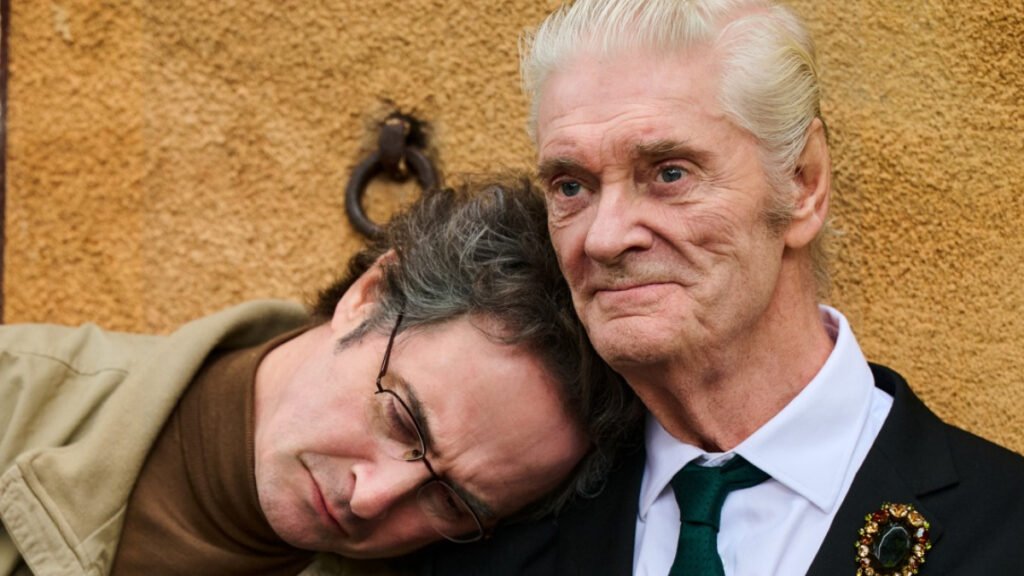
One of the best things about this Swedish film Je M’appelle Agneta, is Einar. This character, who was excellently portrayed by Claes Månsson, is very eccentric and emotional. In the beginning, Einar dislikes Agneta’s company, but later on, she becomes a part of his life and turns out to be a source of transformation for him.
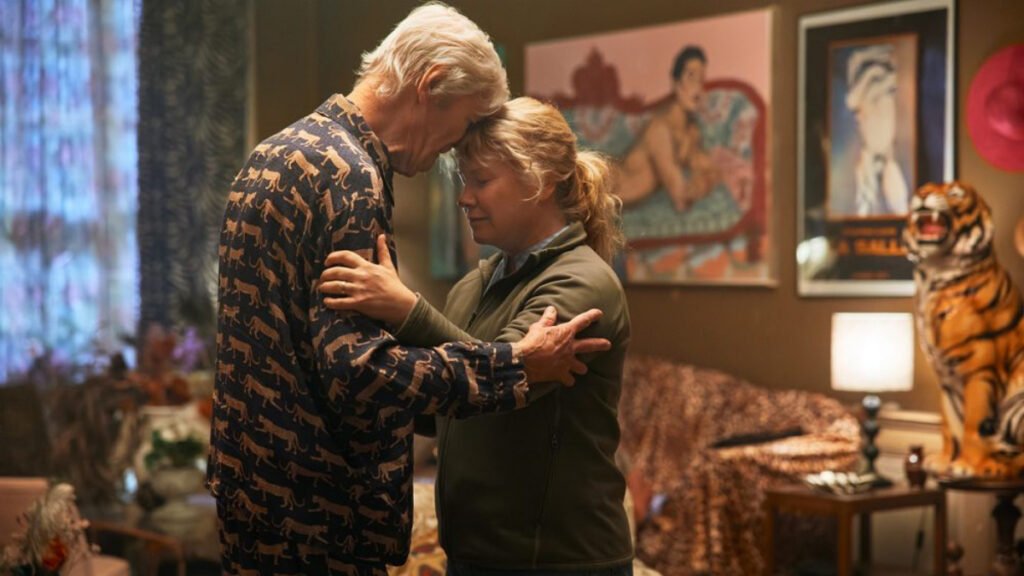
One aspect of the story that I found very appealing was the naturalness with which Agneta goes through her metamorphosis. It is not forced, nor is it unnecessarily exaggerated. Rather, it develops through small but significant events, be it her discovering that she can relish life’s simple pleasures without any feelings of guilt, or when she steps out of her emotionally safe bubble. One such memorable scene occurs when Agneta starts seeing herself as an entity separate from her marriage and her motherhood. She recognises herself as an individual with her own wants and needs.
A connection like that between Agneta and Einar brings something new to the story. Although he makes her appreciate everything life has to offer more, the movie reveals in its own quiet way that Einar is also a person with emotional issues. That is seen from his life experience, especially the one involving his son. It seems that in his colourful personality, there is still some kind of fragility.
In terms of the cinematography, the Netflix Swedish movie Je M’appelle Agneta presents a feast for the eyes. The transition from the bleak existence in Sweden that Agneta leads to the bright, sunny settings in Provence is an exact match for her emotional transformation. France does not serve as only a setting for the events but, on the contrary, takes on its own persona as an element of warmth and liberty.
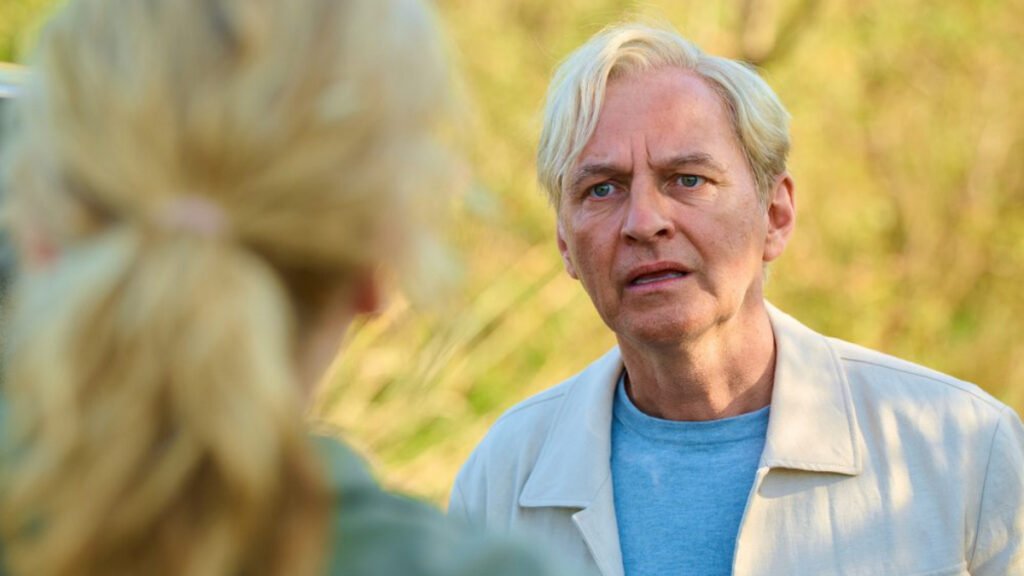
In terms of performances, Eva Melander offers a highly sensitive and empathic depiction of Agneta. The actress skillfully conveys the change from restraint to awakening and manages to make it quite convincing. When it comes to Claes Månsson, he manages to bring together comedy and tragedy into the depiction of Einar without ever allowing him to become a caricature.
Notwithstanding all these, however, the movie is not completely perfect since at some point, it borrows from clichés that form part of the “self-discovery” theme. Going away from a monotonous existence to seek meaning in another exotic country is something that has been done before. Also, some supporting characters, such as the ones in Agneta’s family, could be developed further to enhance their complexity.
But the reason why this movie is exceptional for me is the sincerity it conveys. Indeed, the idea of this movie is not imposed, but rather told straightforwardly and openly – it is possible to reclaim one’s life and form one’s identity even at an advanced age. Moreover, the film Je M’appelle Agneta is unique because it does not strive for perfection. Rather than depicting Agneta’s transition to a new person, the movie portrays her process of rediscovery of her true self by returning to what had been forgotten.
Netflix Je M’appelle Agneta Review: Summing Up
All in all, Je M’appelle Agneta turns out to be an enjoyable viewing experience that successfully combines comedy, drama, and reflection. Although the movie follows a predictable storyline, it does so in such a compelling and authentic way that makes watching it worthwhile. By the end of the film, there is a feeling of contentment without any grand climaxes. It is a film that stays with the viewer, not because of any surprising plot elements, but due to its naturalness and humanity.
Also Read: Should I Marry a Murderer Review: Disturbing Documentary Blurs the Line Between Love and Fear
