

Idol I Ending Explained: The Korean drama 아이돌아이 consists of 12 episodes, which combine courtroom tension with idol-industry critique and slow-burn romance to create an emotionally complex story. The drama unravels its core themes through the performances of Choi Soo-young, who plays the emotionally reserved lawyer Maeng Se-na, and Kim Jae-yeong, who portrays the troubled idol Do Ra-ik. The series humanises idols through its storytelling, yet maintains a commitment to showing their actual life experiences without any romanticised elements.
Korean Drama Idol I Recap
Korean drama Idol I centres on Maeng Se-na, who works as an undefeated lawyer and maintains a secret identity as a dedicated fan of the idol group Gold Boys, especially its main member Do Ra-ik. Her court demeanour shows her as a detached and robotic person, but her private existence reveals her battles with loneliness and unhealed emotional wounds, and her strong attachment to music, which once helped her survive. Ra-ik functions as an idol who suffers from excessive performance standards which his dedicated fans expect from him and who fights against the childhood traumatic experiences which resulted from his father and mother abusing him.
The story enters a dark phase after Woo-seong, who was Ra-ik’s closest friend and bandmate, dies inside Ra-ik’s residence. Ra-ik’s idol status changes to murder suspect status because an entire night passes. Ra-ik discovers his complete isolation after his agency cuts ties with him, and his bandmates reject him, and the public starts to judge him until Se-na appears to protect him through her legal skills, which she uses to find the facts.

The drama’s investigation process removes hidden layers of deceit that exist inside the idol industry. The internal disputes which the Gold Boys face, together with their unfair contracts, their power-hungry CEOs and their media control operations, all become exposed. Se-na has to confront her past when the case brings back memories of her father’s wrongful conviction, which has driven her to seek justice. The relationship between Se-na and Ra-ik starts to change because they begin to depend on each other to provide comfort, trust and essential emotional support.
Ra-ik faces various obstacles due to his ex-girlfriend Hye-joo, who brings toxic behaviour, and his band member Jae-hee, who becomes envious and the main prosecution team led by Byung-gyun, who has lost his moral direction because of his father’s corruption. The mystery during Idol I episode 12 develops into a complex investigation because the story reveals how guilt affects people while doing so.

Idol I Ending Explained
Who Was Woo-seong’s Killer?
Hye-joo, the ex-girlfriend of Ra-ik, actually killed Woo-seong. The drama suggests that this was not premeditated murder since Hye-joo did not mean to kill him; she just wanted to hide her intention to kill him. Hye-joo had heard that Woo-seong was moving Gold Boys to another company, which would end her professional relationship with Ra-ik and all her other industry connections.
During their confrontation, emotions escalated. Woo-seong, already under immense pressure from the CEO and burdened by guilt over Ra-ik’s suffering, argued with Hye-joo. In the heat of the moment, Hye-joo pushed him. He fell, hit his head, and died instantly. The shock of what she had done did not lead her to seek help. Instead, driven by fear and self-preservation, she cleaned the scene, erased evidence, and deliberately staged the situation to frame Ra-ik.

The audio recording of their confrontation, which Woo-seong saved to his cloud storage, proves her guilt because it contains evidence of their argument. The evidence proves her physical presence at the scene, while the evidence shows her plan to hide the actual situation. Hye-joo’s attempt to escape from the country and her decision to stay silent about her actions prove her guilt in the matter. The final moments of Idol I Korean drama show that idol power struggles caused Woo-seong’s death, who died because of human greed and deceit rather than Ra-ik’s actions.
Did Se-na Succeed in Getting Justice for Her Father?
There is no question that Se-na has taken meaningful steps towards her father’s justice from the first to the final episode. Once Ra-ik is free of blame, she walks away from her high-ranking role at the firm, placing honesty above rank. That move shows how she has changed; cold precision no longer shields her.
Wrongfully convicted long before, her father’s case pulls every bit of Se-na’s attention by the last episode. This time around, the courtroom doors open again – less about rules, more about peace settling deep in her chest. Once silent, she stands taller now, shaped by experience, speaking up where silence ruled before.

Even if the show never says what happens next, you can tell Se-na is moving forward. What matters most? The case opening again, seen not just as progress, but as something won after a long struggle. Years of silence, routine, and hurt, they shaped this moment. Idol I closes with a quiet idea: fairness might take time, yet still arrive for those who keep walking.
Did Ra-ik and Se-na End Up Together?
Yes, Ra-ik and Se-na do end up together, but their relationship progresses in a manner that makes it seem mature and real. Their relationship begins with fan and idol love, but it progresses to a point where both individuals understand each other. The couple attains their first public confession of love after they have attained a complete balance in their relationship.
Ra-ik shows his support for Se-na in public gatherings where he is seen with Se-na, even when journalists are watching him, which shows that he has learned to accept his need for love and his emotional side. Se-na begins to show her true feelings, which she had been hiding behind her professional mask. Their one night together is not depicted as fan service but as the emotional peak that shows a moment of trust rather than fantasy.
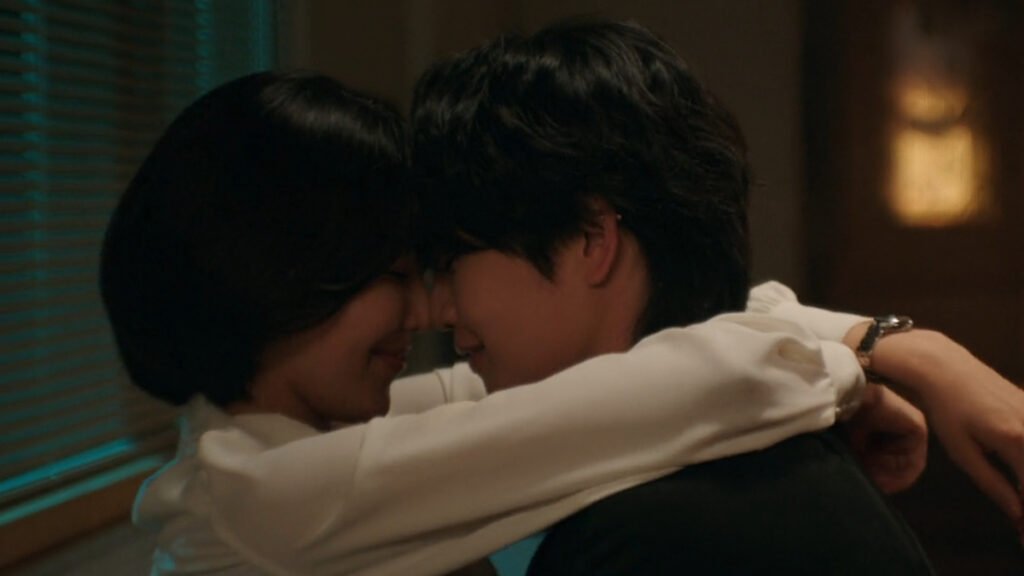
The characters get an ending because none of them has to give up who they are for each other. Ra-ik keeps doing his music like he always wanted, and Se-na keeps fighting for what’s right. The couple uses their relationship as a place where they can both feel totally at ease. Ra-ik and Se-na are happy with their music and legal fight. They are happy with each other. That is what matters.
What Happened to Park Chung-jae by the End?
By the end of Idol I, Chung-jae grows as a character through his need for validation and maturity to know when it is time to move on. Chung-jae has been with Se-na as her closest source of comfort, both emotionally and professionally. Even though he has been in love with her for most of the time they have been together, he still remains there for her even when she does not return his affections. When Chung-jae finally confesses his love and gets an unrequited response, it marks a level of maturity in his character, not a downfall.
Chung-jae decides to move on from his past resentment and options for bitterness. After he goes through heartbreak in episode 12 of Idol I, he goes on to open his own office, symbolising his need to find his own identity apart from Se-na. Their goodbye is also laced with warmth and memories rather than sadness. Their goodbye is very affirming that Chung-jae will never end up with Se-na, but he does end up with a far more spectacular success of finding independence and respect.

Chung-jae’s success is also enhanced by the fact that he is a successful second lead and not a tragic one. Chung-jae also remains an important character in Se-na’s life; it is just not what he had in mind. By the end of the series, Ra-ik reconfirms his respect for Chung-jae, and the two of them share a mutual respect for each other as their past animosity is settled.
What Happened to Gold Boys at the End of Idol I?
The Gold Boys make it through their adventurous journey successfully, and they are all changed for the better. The death of Woo-seong left them all scarred, but it became a turning point for all of them. The Gold Boys are now stable, have produced new music successfully, and have paid tribute to Woo-seong by not remaining silent in his memory.
Jae-hee, who was once driven by envy and bitterness, attempted suicide but is now suffering from the consequences of all his decisions. His recovery is genuine and slow. Rather than feeling guilty about how he treated Ra-ik before, Young-bin has decided to stick with loyalty and self-improvement. Most importantly, Ra-ik is no longer carrying the burden of the group, whether it is emotional or professional.

At the end of the Idol I Korean drama series, the Gold Boys are now a symbol of hope and resilience in this ruthless industry. They teach us that idols should not be treated like merchandise; they are human beings who are affected by this industry through fear, pressure, and hope. Finally, the final concert is not only a comeback but also the redefinition of their identity.
Also Read: 5 Kdramas Like Idol I That Question Fame, Truth, and Human Fragility
