

Plastic Beauty Review

Director: Yuki Saito
Date Created: 2026-09-17 20:58
4.5
Plastic Beauty Review: Directed by Yuki Saito, with Mayu Matsuoka leading the cast as surgeon Fumi Numata and Riisa Naka playing cosmetic surgeon Rin Tohyama. The series also stars Shotaro Mamiya, Minami Tanaka, Riku Hagiwara, Mijika Nagai, Hiromi Nagasaku and Atsuro Watabe, among others. The Netflix Japanese series ダウンタイム has eight episodes, each with a runtime of 60 minutes.
Plastic Beauty Review
Netflix’s Plastic Beauty revolves around Fumi, who is a brilliant surgeon but has the firm belief that the core purpose of medicine lies in saving people. However, she finds herself working in Rin’s cosmetic surgery facility despite the deep dislike she has for this kind of surgery. Rin, on the other hand, is an esteemed surgeon who believes that a person’s appearance and his life can be altered through surgeries. The professional relationship between the two is made even more complex by the different factors that bring the patients to Rin’s surgical facility.
What made me uncomfortable about the Netflix series Plastic Beauty is that it does not deal with the issue of plastic surgery in terms of whether the act of changing one’s appearance is good or bad. Rather, it continually poses the question of why an individual feels the need to change his or her appearance in the first place. It makes the series a lot more powerful in that respect. Beauty surgery has reached a level of frequency where it may be talked about almost as if it were a normal procedure for making oneself more beautiful.

Most likely, the example of Tanaka Yoshiko is the most evident illustration of this. She aspires to be a voice actor; however, despite her talent, she witnesses how such an opportunity goes to a woman meeting a certain standard of beauty. Her insecurity is not caused by her dissatisfaction with her reflection in the mirror.
Rather, it is rooted in her career, her family circumstances, and the perception that the world will never provide her with any chances until she changes herself. In the end, when she receives her nose surgery and takes a look at herself, she seems truly happy with her new appearance. This aspect is very important since the series does not mock her desire as utterly absurd.
But then, the ramifications start stacking up. Tanaka is prepared to resort to extreme measures in order to finance her cosmetic procedure, and once her newly reconstructed image is in jeopardy, she is absolutely petrified about going back to her former self. It is particularly hard to see her make such a rash decision when it comes to undergoing another procedure following the breaking of her nose, since Fumi tries to persuade her that she should allow the original nose time to recover first. The reaction that Tanaka gives off speaks for itself in terms of how far her insecurity has gotten to her.
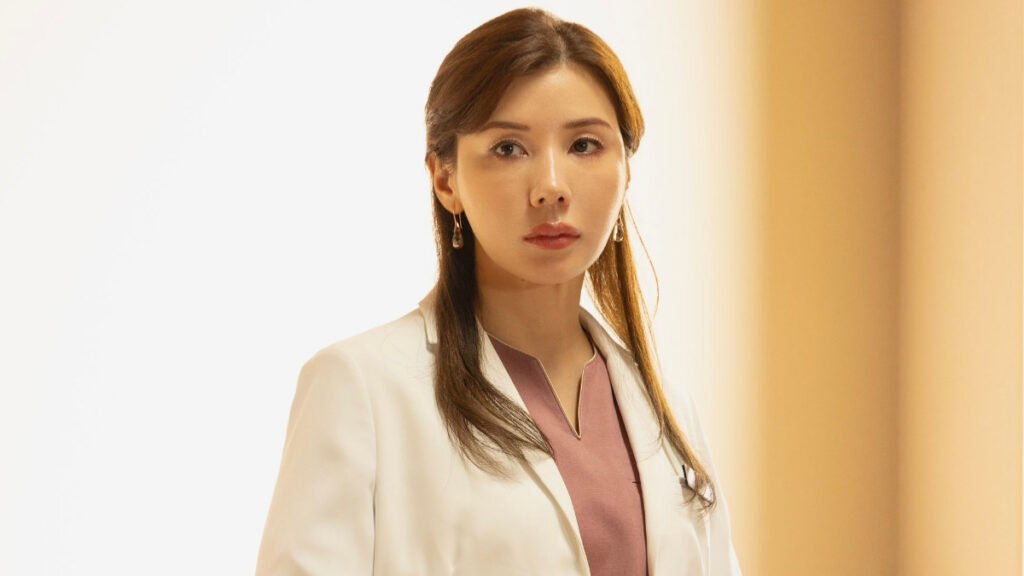
This is where the character of Fumi gets really interesting. First of all, everything about her role makes sense. She views herself as a doctor, whose task is to maintain the health of a patient, and so the preoccupation of the cosmetics business with appearance makes no sense to her. However, by having to work with Rin, she is forced to deal with people who actually believe that surgery can improve their lives. Her most difficult task is to see that dismissing their desire as mere vanity won’t make the problems go away.
For one thing, Rin is no mere villain who exploits the weaknesses of others. Indeed, there are times when Rin makes decisions that are highly questionable, especially when the profit motive seems to outweigh the patient’s well-being. One obvious instance would be in the case of Kanabun. Kanabun is clearly someone who is highly dependent on maintaining her image and is clearly someone whose physical and psychological vulnerability comes into the picture owing to the problems with her implants and Botox.

The disturbing aspect of the Japanese series Plastic Beauty comes in the fact that the program actually shows how the industry itself can actively feed the insecurities that it attempts to solve. The drama is not merely about patients who come to a clinic. The program actually shows the environment around them. The clinic is associated with the media, new doctors are integrated into the system, and even the host bar is connected with getting people interested in undergoing the operation.
And this is where the whole Netflix Japanese series Plastic Beauty struck a chord with me as a woman, since there is nothing more painfully familiar than this kind of pressure on one’s appearance. Society has taught us, both directly and indirectly, that the way we look could mean the difference between getting the job, getting the attention, acceptance, being liked, and feeling like we are worth something at all. And then, the drama puts this pressure to use and questions how an industry makes money off this familiarity. And that is the uncomfortable truth: those people going under the knife aren’t stupid.

I also appreciated the fact that Netflix’s Plastic Beauty series does not limit its questioning to young women. As patients from different walks of life are featured in the series, it is possible to see the complexity of motives that may drive people to opt for such procedures. The story of the terminally ill Sakashita is a good example of how complex the issue of what proper treatment is becomes when faced with such cases. For Fumi, it was an unethical procedure, whereas for Rin, it was about the patient’s right to dignity.
Matsuoka Mayu is great in the role of Fumi since she portrays the firmness in her convictions without making her character emotionless. The frustration, guilt, and confusion of the character can be seen increasing as her beliefs are put to the test. Naka Riisa is just as good in the role of Rin because she portrays her character in a way that is not only threatening but vulnerable enough not to come across as a stereotypical antagonist.
However, the show does have some faults. Certain parts take up more time than is really needed, and the drama involving family members in the lives of Fumi tends to get a little over the top compared to the very compelling medical and ethical stories. At other times, it seems like the show should be spending more time with its patients instead of certain subplots.

Netflix Plastic Beauty Review: Summing Up
Overall, the 2026 series Plastic Beauty had an impact on me that was far greater than what I would have felt while watching a typical medical drama. While some of the surgeries are quite gory and difficult to watch, it is the psychological side of the show that is actually the most disturbing. The feeling comes into play when a person sees his or her face and thinks that the only thing stopping them from living a better life is their natural appearance.
Also Read: The Doll Review: Class-Filled Romance With Two Characters You Can’t Easily Figure Out
