

The Great Flood Review

Director: Kim Byung-woo
Date Created: 2025-12-19 18:54
3.5
The Great Flood Review: Directed and penned by Kim Byung-woo, 대홍수 is a science fiction disaster movie with a length of 106 minutes. The film features Kim Da-mi playing An-na, a great AI researcher and a single mom, together with Park Hae-soo as Son Hui-jo, while Kwon Eun-seong is seen as An-na’s little son, Ja-in. In addition, the movie has a strong supporting cast, including Jeon Hye-jin and Park Byung-eun, and it aims to blend the concept of a huge natural disaster with the speculative element of science fiction.
The Great Flood Review
Netflix’s The Great Flood follows the story of An-na and her son, who are trying to stay alive when the unprecedented rain covers Seoul, thus making a building with many floors a very tight and suffocating place of death—meanwhile, it very subtly suggests that this catastrophe may be linked to something much more than just Mother Nature’s wrath.
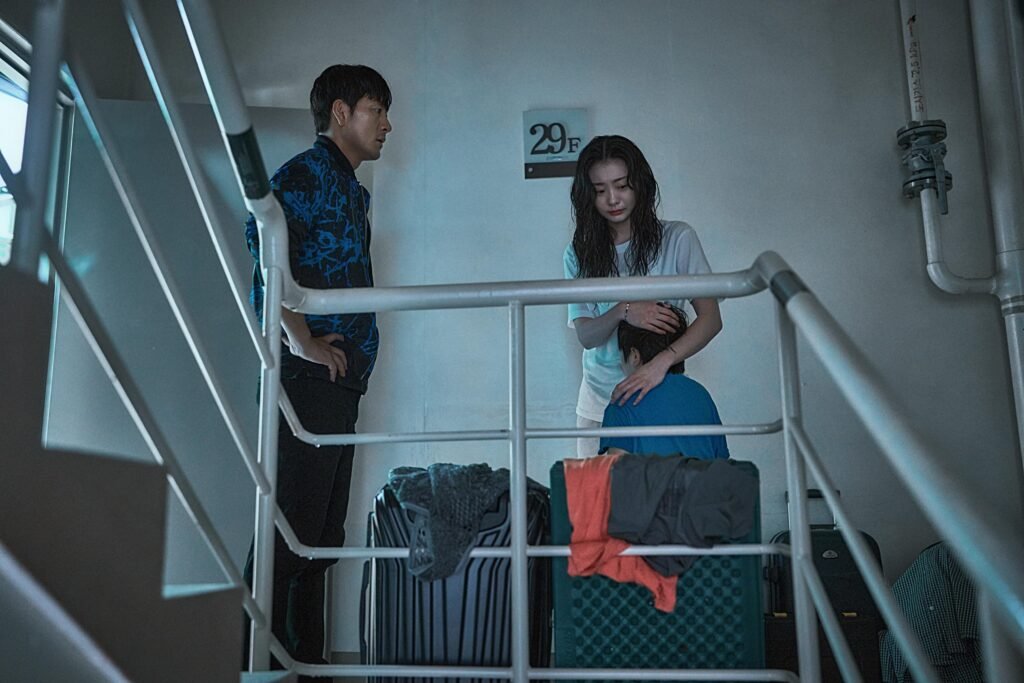
The film, right from the very beginning, creates a lot of tension very quickly. Uncontrollable rain, the gradual increase of water, and the sudden collapse of everyday life order all contribute to a feeling of panic that is instant and disturbing. Kim Byung-woo is very good at producing disaster scenes in limited areas, such as the ones with flooded corridors, broken down elevators, and closed staircases, all of which intensify the feeling of fear.
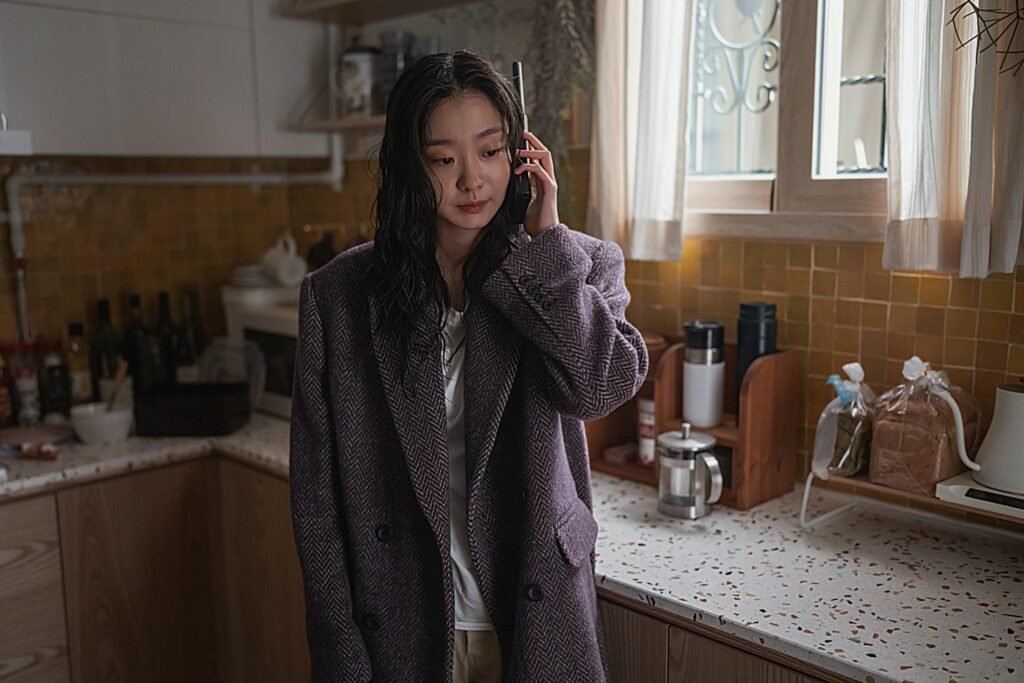
These scenes are without a doubt the most powerful ones, as they resonate with the basic anxiety that is characteristic of the best survival-thriller films. The sight of ordinary people scrambling for safety as instincts override morality is riveting, even if the genre itself does feel rather familiar.
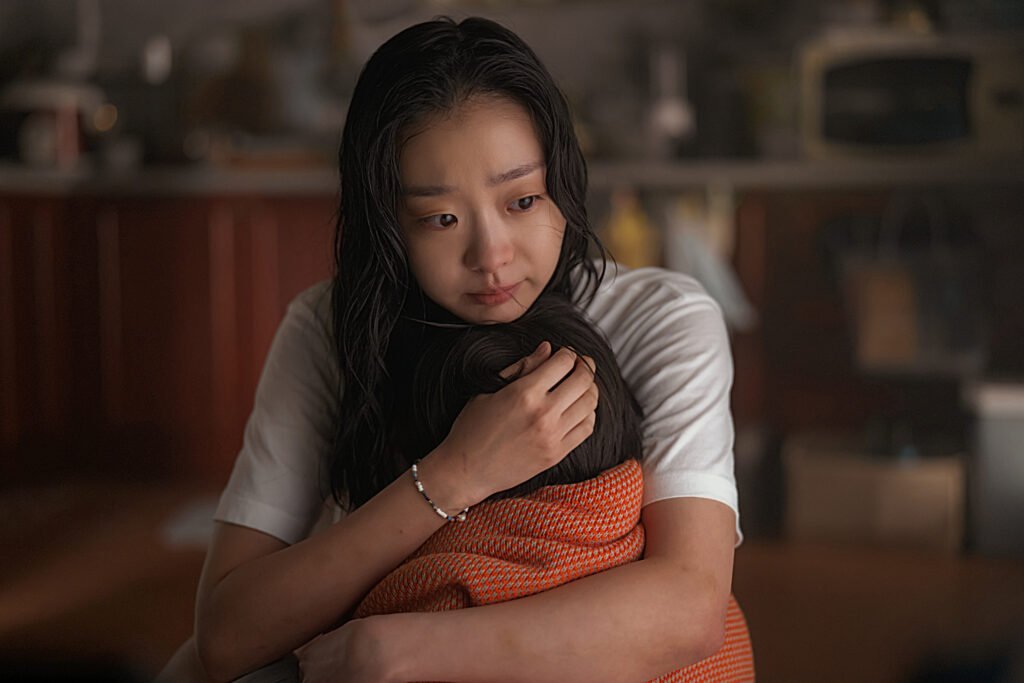
What makes The Great Flood movie stand apart from the regular disaster flicks is its emotional core. The film does not primarily concern itself with large crowds or political reactions; it rather stays mostly intimate and depicts mainly the mother’s despairing attempt to save her child. Da-mi Kim shoulders this duty with amazing and believable strength. Her interpretation of An-na is complex – smart but very tired, emotionally protected but very open. The film often displays the most touching moments in quiet ones with no conversations, just her face showing fear and determination flickering. Kim Da-mi is the centre of the whole thing—she keeps the film from getting into empty visuals that are just for show.
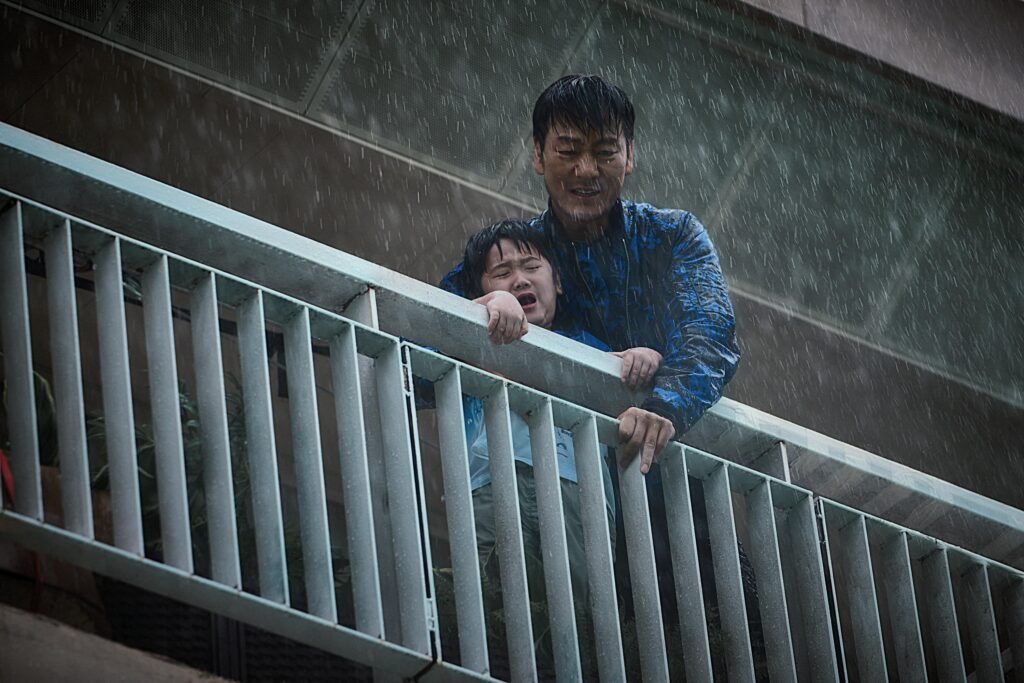
Park Hae-soo’s character adds mystery and drama, but the nature of his role is more that of a narrative springboard than the one explored through emotions. His being there suggests hidden intentions and higher stakes, changing the film’s tone from survival thriller to speculative mystery, and doing so very slightly. This change is both the film’s most daring decision and its biggest risk.
The movie The Great Flood is visually competent if not particularly impressive. The CG floodwaters and large-scale destruction are believable enough to keep the audience engrossed, especially during the inside scenes, where water pressure and not being able to see much make it feel very real. The film does not resort to excessive showiness, but instead, it chooses to work on the aspects of life and confinement. Nonetheless, it allows some repetition to sneak in, especially as it shows similar escape attempts and near-misses happening one after another. This repetition, while possibly thematically intentional, can be a patience tester.
Also Read: 2025 Melon Music Awards Lineup, Where to Watch, Nominations and All We Know So Far
The point where the film loses its vigour is when it tries to handle disaster storytelling and heavy sci-fi concepts at the same time. The ideas are fascinating — connecting with human life, emotional memory, and moral dilemma — but the presentation is messy. There are explanations that come in at unsuitable times, cutting off tension instead of making it stronger. These components do not help in making the plot clearer but rather make it more difficult to follow, causing the movie to be more overwhelming than necessary.
This dilemma in balancing the elements also hits timing. Although 106 minutes is the length of the movie, sometimes it seems too much, as though it wants to be both a survival film with great visual impacts and a philosophical sci-fi meditation, but it has not completely mastered either. The emotional highlights are still effective, mainly because of Kim Da-mi’s acting, but the intellectual ambition sometimes clouds the raw simplicity that makes disaster films powerful.
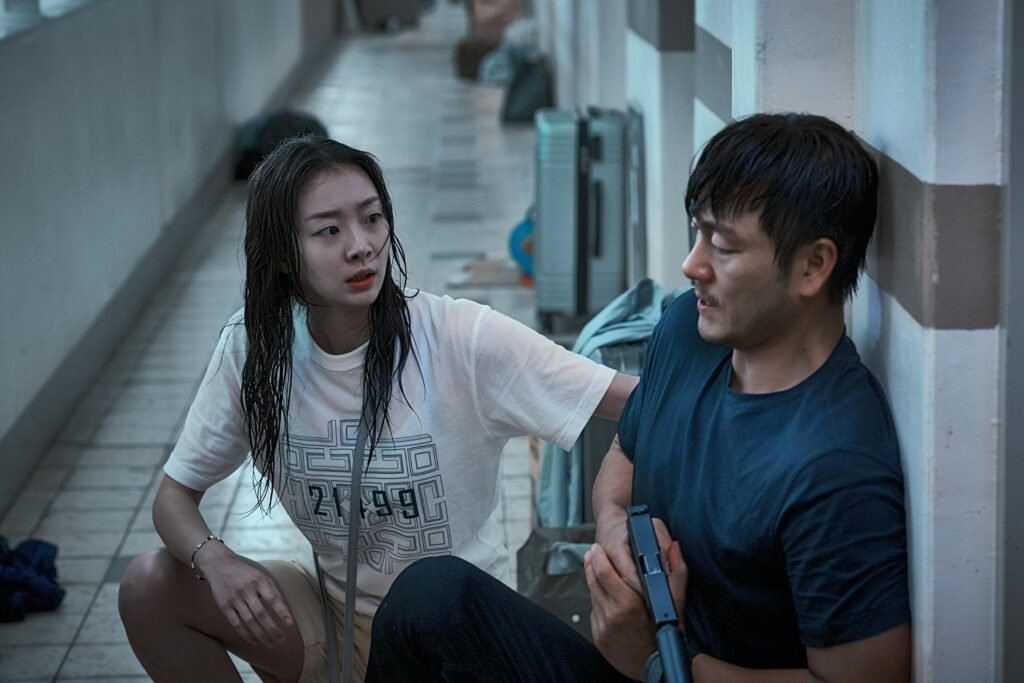
Nevertheless, the film has been credited for its thematic honesty. The Great Flood is obviously trying to picture not only the destruction of the Earth by flood but also the rebound of mankind through the concepts of love, surrender, and the very idea that emotional attachment — that is often seen as weakness — may turn out to be mankind’s greatest strength. These ideas hit home, even if the narrative becomes unclear. The movie does not consider sentiment as the only thing emotional; rather, it positions love and moral feeling as being of such importance that they deserve to be guarded, even at the cost of extinction.
Ultimately, The Great Flood is a film that works best when it keeps its focus narrow and personal. Ambitious to a fault, and with an emotional core strong enough to elevate it above disposable disaster entertainment, poor narrative clarity and overloaded concepts hold it back from reaching its full potential.
Netflix The Great Flood Review: Summing Up
Visually spectacular, emotionally surefooted, and keyed by a knockout performance from Kim Da-mi, the movie stumbles in its execution and often gets lost in complexity, but it remains an engaging and thoughtful watch, particularly for viewers who enjoy disaster films that at least try to say something more, even if they don’t always succeed. For all of its flaws, Korean movie The Great Flood is a solid, memorable effort, rewarding patience and emotional investment.
Also Read: The Great Flood Ending Explained: Did An-na Succeed in Finding Ja-in? What Happened to Son Hee-jo?
