

Murder in Galicia Review
Director: Carlos Sedes
Date Created: 2026-11-13 18:55
3
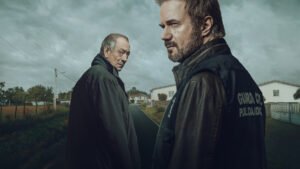
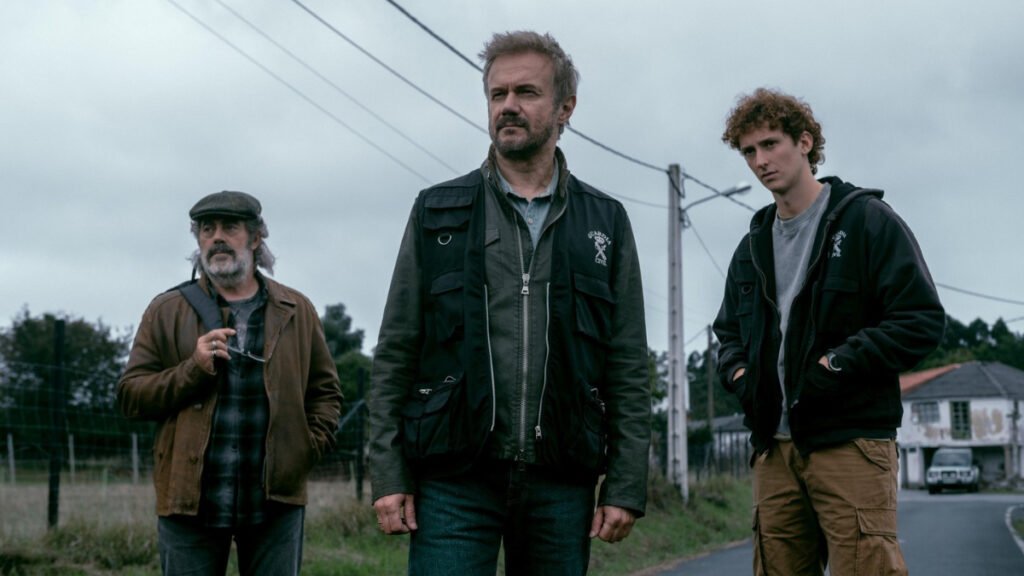
Murder in Galicia Review: Directed by Carlos Sedes, the Netflix Spanish crime drama El crimen de Pazos is a three-part series that stars Tristán Ulloa as Civil Guard sergeant Elías Lago, Miguel Borines as Aniceto, Carlos Blanco as Turrientes and Fernando Fraga as Barreiro, alongside Marta Nieto, Verónica Sánchez, Luisa Merelas, Isabel Garrido and others. Based on the real-life 2015 Isabel Fuentes case, the drama arrives shortly after Netflix’s documentary Unprotected: Murder in Galicia, offering another look at the same disturbing events, this time through a fictionalised retelling.
Murder in Galicia Review
Netflix Spanish series Murder in Galicia takes place in a serene Galician village called Pazos. The novel opens up with an assault on Irene, who happens to be a 60-year-old lady by her husband’s Aniceto. Aniceto states that the criminals who assaulted Irene were wearing masks while trying to rob them. However, right from the start of the book, the Civil Guard sergeant named Elías Lago starts questioning the whole scenario and starts believing that this wasn’t a robbery and the husband might have committed the crime. Although it’s easy to make assumptions, taking action isn’t as easy as it sounds.
Since I had seen the documentary on the case last week, I was aware of the case as well as the sort of frustration that I would feel as a result of it. This case really took me by surprise and left me frustrated with the way things were taking place around it. Watching the Netflix series Murder in Galicia also evoked the same frustration from my side, but at times I even felt more helpless because the documentary made me witness how helpless someone is when he/she really needs protection but people can’t act fast enough.
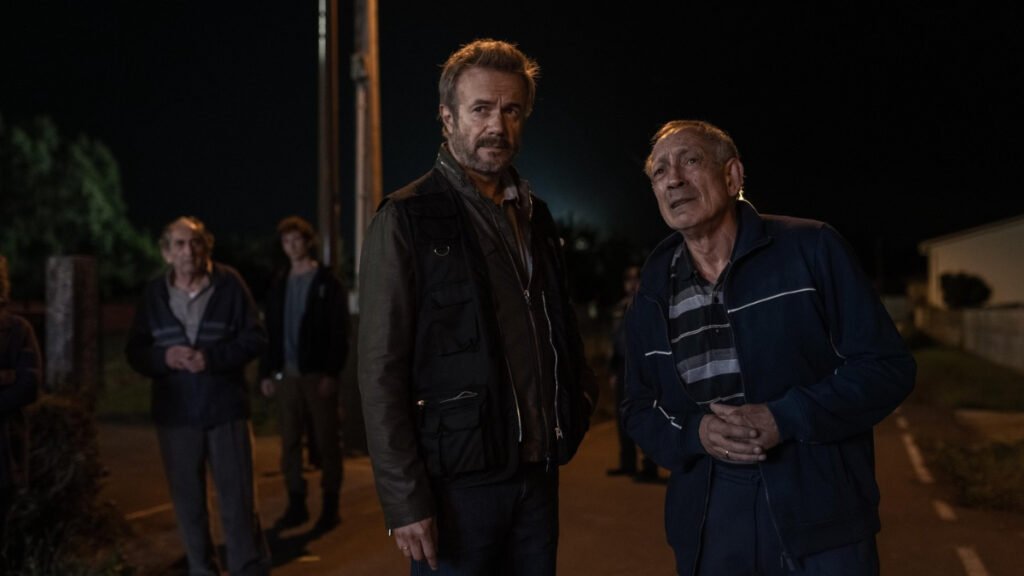
The thing I like about this three-part piece is that it does not attempt to present this story as a typical murder mystery. The writers are not concerned with making us try to figure out who the attacker was, leaving the identity of the alleged perpetrator in a veil until the very end of the piece. Instead, we are put in Elías’ shoes while he attempts to convince the authorities of the situation he sees. This change adds a new level of intrigue to the narrative, as the question that has to be answered becomes why identifying an alleged threat is not enough to save the endangered person.
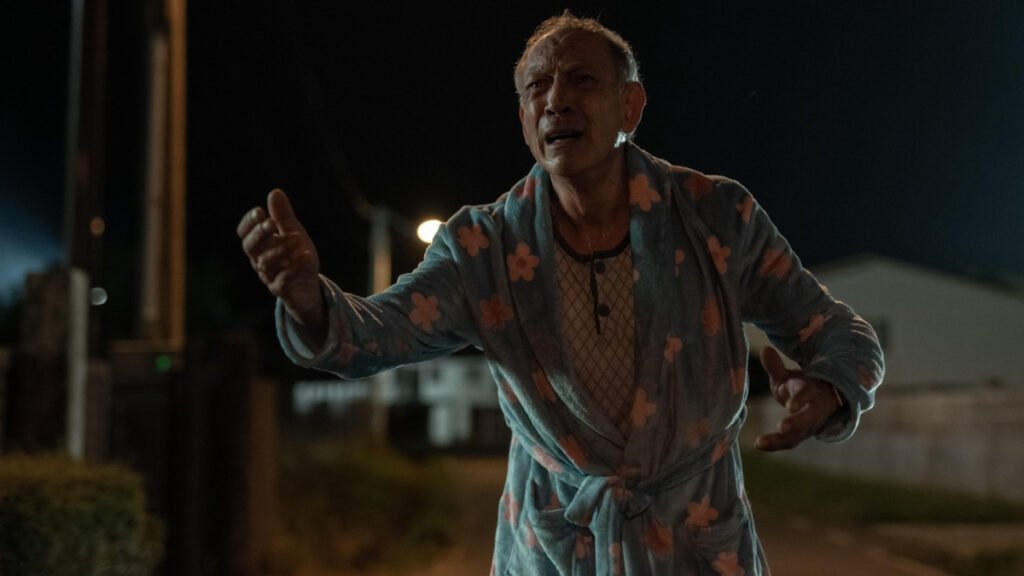
One of the most distressing things about this story is seeing how vulnerable Irene is as Elías tries to make all those surrounding him believe that Aniceto must not have free access to her. He wants her to have protection, and he needs guards to come along when she comes to visit the hospital, but the judge handling the case refuses to accept his claims and act on them until he gets more substantial evidence. In theory, it could be argued that this reluctance to act is part of the proper process. Yet, when you look at what happens to Irene and realise how much time is wasted, it becomes extremely frustrating.
Furthermore, I found the character of Aniceto very troubling due to the impact of his character on the general mood of the story. To everyone else, Aniceto and Irene had a perfectly normal marriage. Apparently, no one saw anything strange about them before the murder, and therefore Elías’s concerns become increasingly difficult for others to understand. In turn, Miguel Borines succeeds in portraying this character without creating unnecessary drama from each and every encounter. There is an inherent sense of dread in the idea that Aniceto could look completely normal while Elías starts feeling more and more sure about the fact that something terrible was going on.
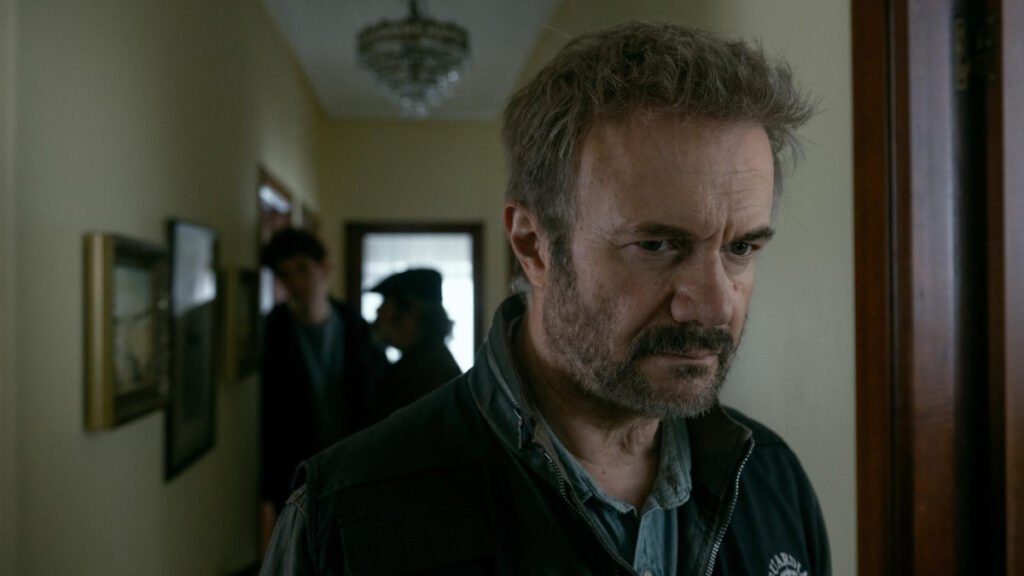
Without a doubt, Tristán Ulloa is the most outstanding character in Netflix’s Murder in Galicia series. Elías, whom he plays, is not some superhero-like detective who miraculously can solve everything. He is just a sergeant who sees, listens to his intuition, and realises that it is urgent to take action. At the same time, Ulloa shows us that Elías has to interact with those who do not feel such an urge. I really appreciated how Ulloa conveyed the feeling of someone who knows what should be done, but cannot get the needed support for this matter.
Everything was shown through his facial expressions and conversation much more than through any conflicts. We see his helplessness when Irene is lying in the hospital, and he understands that waiting for the investigation is not the best option. But there is also another aspect of the storytelling that should be criticised, in my opinion.
Even though I see why the show focuses on Elías and the bureaucracy associated with the investigation, I also felt that the focus could shift to Irene sometimes. She is the one whose life has been ruined because of this event, but a lot of time is spent on how hard it is for the sergeant to convince people. We see that it is a serious problem, but I was hoping that the series would make us feel emotionally connected to the woman. It becomes even clearer once you have seen the documentary and realise that there is a real woman behind the fiction.
I believe the other supporting characters could have been portrayed a little bit more effectively. There are police, forensic scientists, medical practitioners and legal professionals who all play their part in deciding how the investigative process will go. Their decisions are crucial as the show intends for the audience to realise that the failure of an institution does not lie with one person’s bad decision at one point in time. It can be the result of many small delays and ignored details, along with people avoiding taking responsibility.
It would also be important to mention Carlos Sedes’ contribution to keeping the film style rather sober. There are no extra dramatic elements or special musical touches attempting to convince the audience that there was something really terrible going on. It all depends on the regular conversations, the process of investigation and the amount of time people have to wait for the decision to be made. I liked such an approach as the reality is shocking enough.
Having said that, there are times when the 2026 Spanish series Murder in Galicia pace proves to be detrimental to the show. Due to the small number of episodes (just three), I would expect the story to retain its emotional impact throughout. Instead, some investigative elements seem to become repetitive, and the frustration involved in Elías’s quest to advance his investigation becomes tedious at times. I am aware that this is what the show wants to do, but there is a difference between demonstrating a flaw within a system and making viewers experience that frustration.
Netflix Murder in Galicia Review: Summing Up
In the end, however, the 2026 Murder in Galicia series is a decent entry in Netflix’s crime series roster. After viewing the documentary last week, I realised that the show managed to bring back all the fear and frustration, especially due to the fact that so many aspects of the disaster appear as the result of failures that should not have occurred at all. There was a lack of focus on Irene, and perhaps the story was unnecessarily stretched out, but the acting and exploration of institutional accountability give it enough merit to see through.
