

It Takes a Village Review

Director: Lukasz Kosmicki
Date Created: 2026-04-01 23:18
2
It Takes a Village Review: Directed by Lukasz Kosmicki and written by Katarzyna Frankowska and Katarzyna Golenia, this 2026 Polish Netflix film Podlasie serves as a sequel to No Pressure. With a runtime of 96 minutes, the movie stars Anna Seniuk as Halina and Artur Barciś as Jan alongside Filip Gurłacz, Joanna Trzepiecińska, Cezary Żak, Anna Szymańczyk, Mateusz Janicki and others.
It Takes a Village Review
Netflix’s It Takes a Village is the story of an elderly yet very stubborn woman named Halina, who finds herself in big financial trouble after being victimised by a scam that depleted her savings. While it is not just her family’s responsibility to save her, but the whole village’s, considering her home and farm are at risk, it is a chaotic and absurd tale of the village’s efforts to save Halina from losing all she owns. The film also re-establishes the relationships set up in the previous part of this series, especially between Halina and Jan, and the younger children, especially Oliwia.

While this premise has some potential, especially in terms of its themes regarding trust, community, and the older generation in an increasingly digital world, it does not do much to live up to its premise. While it is going down a path of some over-the-top comedies, it is not doing so in an effective or emotionally impactful way. While it had the potential to be a realistic and heartwarming tale of overcoming adversity, it is instead a series of events that feel more like sketches than an actual film.
The biggest problem with the Netflix Polish film It Takes a Village is getting into the main character, Halina. While an imperfect character is often necessary for an interesting story, the way that Halina is portrayed makes it difficult to relate to her, especially as her stubborn personality and ability to manipulate people become annoying. She seems to simply repeat the same patterns of behaviour rather than change and improve in meaningful ways. This is especially a shame, as the movie expects the viewer to support her character, but provides very little motivation to do so.
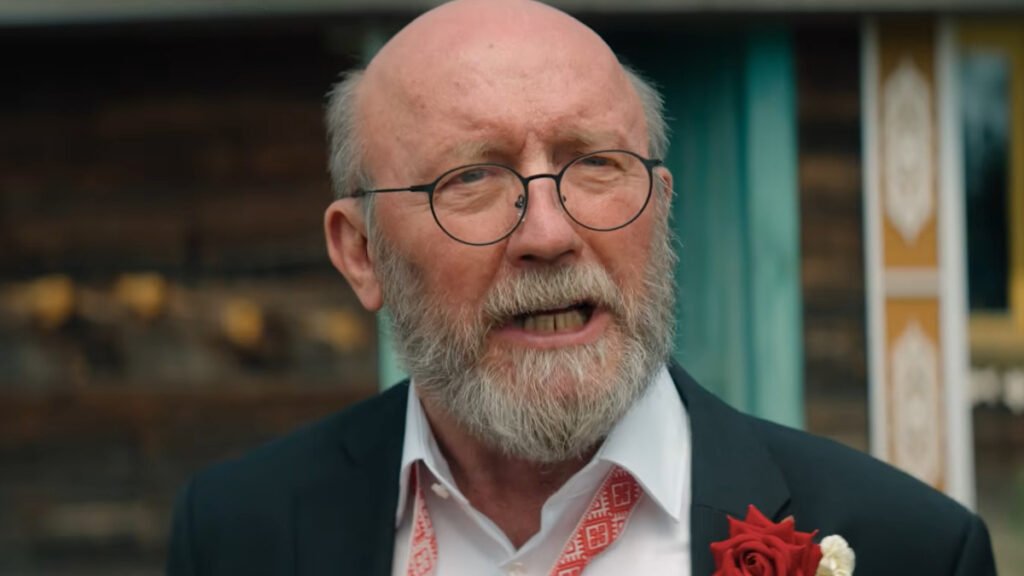
Anna Seniuk does what she can with the part and brings a certain theatrical charm to Halina, although even a veteran actress such as Seniuk can do little to overcome the one-dimensional nature of the part. Artur Barciś, playing Jan, has a few comedic highlights, although even he does not escape genre cliches, behaving rashly rather than thoughtfully in many scenes. The relationship, which could have formed a core emotional centre for the film, comes across as underdeveloped and relying too much on misunderstandings, which might have been cleared up with a bit of communication.
Also Read: Humint Review: Intense Espionage Tale Weighed Down by Predictable Tropes
The supporting cast is slightly better, with some nuances and relatable qualities, especially with regard to how the main storyline was handled. The storyline with Oliwia and Ewa has more promise, with more grounded and interesting conflicts, especially with regard to how they manage to balance their aspirations and responsibilities, as well as deal with how their lives have changed. The issue, though, is that they did not get enough development, and it feels like this movie could have been more interesting if they had focused more on the supporting cast rather than Halina.

It is also important to note that the film does capture the charm of the Polish countryside fairly well. The Polish countryside is actually very picturesque, and the film does make an obvious effort to show the contrast between the simple country life and the chaos caused by external influences. However, the charm of the Polish countryside does not translate into good storytelling. Even when the Polish countryside becomes an integral part of the resolution of the plot, the interactions between the characters are superficial, lacking the sense of community that is being portrayed.
One thing that does not quite fit in the Polish movie It Takes a Village is the humour. The tone of the film is comedic, and much of this is achieved through exaggeration and ridiculousness. While there are a few times when this type of humour does succeed, most of it does feel forced and repetitive, especially when one considers that, rather than relying on clever or situational comedy, the script has chosen to use over-the-top antics, and this does make the film feel like a longer film than its 96 minutes, even with its quick pace.

Netflix It Takes a Village Review: Summing Up
In the end, It Takes a Village is a movie that does not know what it wants to be. It tries to be a comedy, a drama, and a statement, and fails at all three. The subject matter, such as financial scams and communities, is intriguing and would have added more depth to the story, especially in today’s world. It simply glances upon the subject matter and takes the easy route with the conclusion and progression.
Also Read: Eat Pray Bark Review: Scenic Retreat That Offers Comfort but Lacks Bite
