

Delusion Review

Director: Chayan Laoyodtrakool
Date Created: 2026-09-24 15:33
3.5
Delusion Review: Directed by Chayan Laoyodtrakool, ภาพลวงตาย is a Thai psychological horror mystery drama starring Natapohn Tameeruks as Wan, Jespipat Tilapornputt as Pete, Surasak Chaiyaat as Narong, Vachiravit Paisarnkulwong as Wat, Sirani Yankittikan as Pannee, TAE as Yote and others. The series consists of six episodes, with each episode running for around 50 minutes.
Delusion Review
Netflix’s Delusion series transports us to the village of Na Sao, where the fear surrounding the local legend of Phii Pong starts to intersect with the search for a missing person. Narong, an old man afflicted with dementia, beats up his wife Pannee after believing that she is the demon, thus making him an automatic target as the culprit for everything happening in the village. Wan, the daughter, comes back home in order to take care of her parents’ problems despite her own problematic marriage to Yote and disputes regarding money and their son, Aim.
Meanwhile, the newly transferred policeman, Pete, begins searching for the missing girl called Mued. The simple case starts to get more complex when folklore starts mixing with dementia, suspicions and even supernatural elements. From the moment I began to watch the Netflix series Delusion, I did not know whether the series was going to be about a certain reality or not. Does Phii Pong exist at all? Is Narong’s behaviour really affected by his dementia or not? Do the villagers use superstition in order to hide the truth from themselves, or is there something else frightening hiding behind it all?
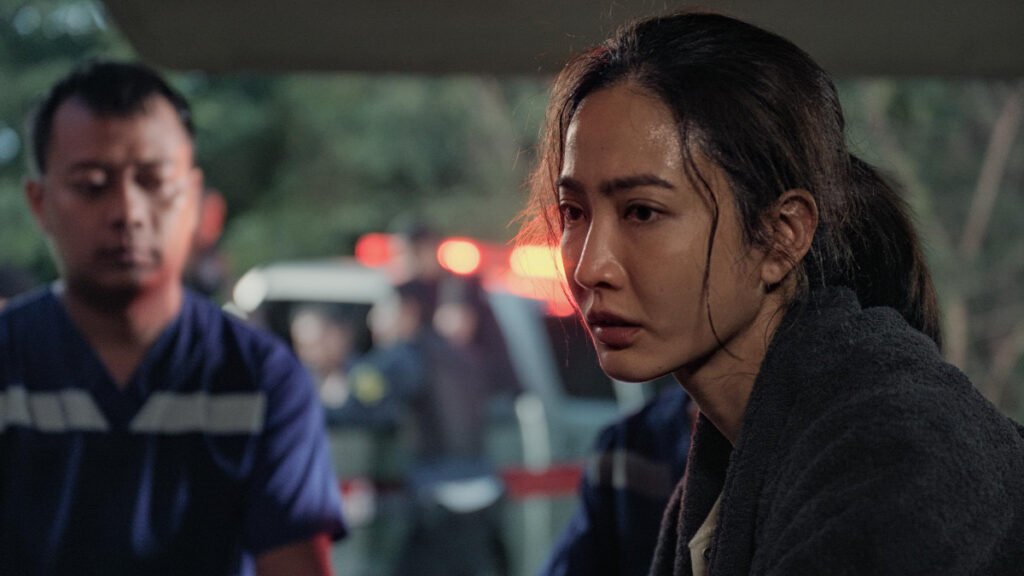
The issue lies in how, at times, the Netflix Thai series Delusion is so obsessed with keeping the mystery intact that it ends up forgetting about propelling the plot forward organically. The main mystery intrigued me, but there were times when I felt like the series kept spinning around the same information without giving anything worthwhile to its characters. In itself, the pacing of the show does not pose an issue because, after all, a rural mystery can certainly take things easy. However, some of that time could have been used better to flesh out the characters and their dynamics.
The emotional aspect of the plot works perfectly here for Wan. It is very personal as well. She is not solving some supernatural mystery in order to be a detective in the future. She is protecting her father from the people who have already made their conclusions about him. Narong’s dementia makes things even harder for Wan since she has to protect the person who, himself, creates doubts about being ill. Thus, Wan’s mission becomes not only the search for the culprit but also something else.
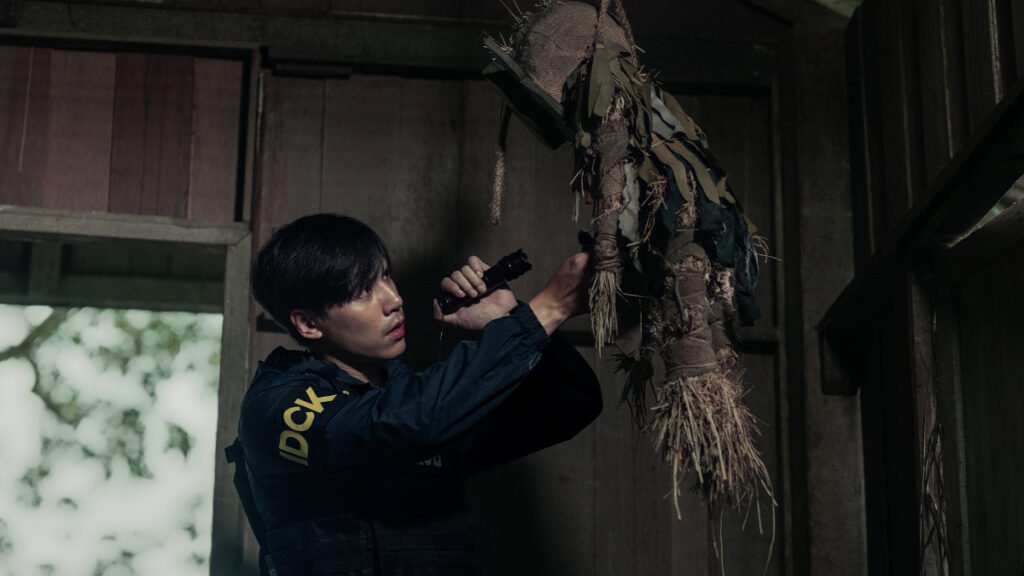
Also, I enjoyed the way that her family troubles get involved with the bigger picture. First of all, her love life with Yote is already breaking down since there are always conflicts between them because of money and Aim’s custody. The second person is Wat, her doctor brother, who at first doesn’t show up when she needs him most. All of these relationships complicate Wan’s situation because the people who should help her have their own troubles too.
Pete offers another point of view on the narrative. While Wan struggles with her family’s secrets, Pete’s relations with Na Sao are purely professional. Pete must discover what happened to Mued and understand what is really going on despite villagers’ attempts to lead him to the conclusion about Phii Pong. I was interested in the difference between Wan protecting her family and Pete discovering the truth. Sadly, I do not believe that the author offers Pete enough information for a good inner struggle.
Talking about the performances, Natapohn Tameeruks carries much of the emotional weight as Wan, especially when the plot begins to affect her understanding of her own family members. On the other hand, Jespipat Tilapornputt adds to Pete’s personality an element of subtlety, while Surasak Chaiyaat faces the tough job of portraying Narong, a man suffering from dementia and hence vulnerable and terrifying at once. Pannee, the other important character, has a personality that becomes increasingly complex as the show progresses.
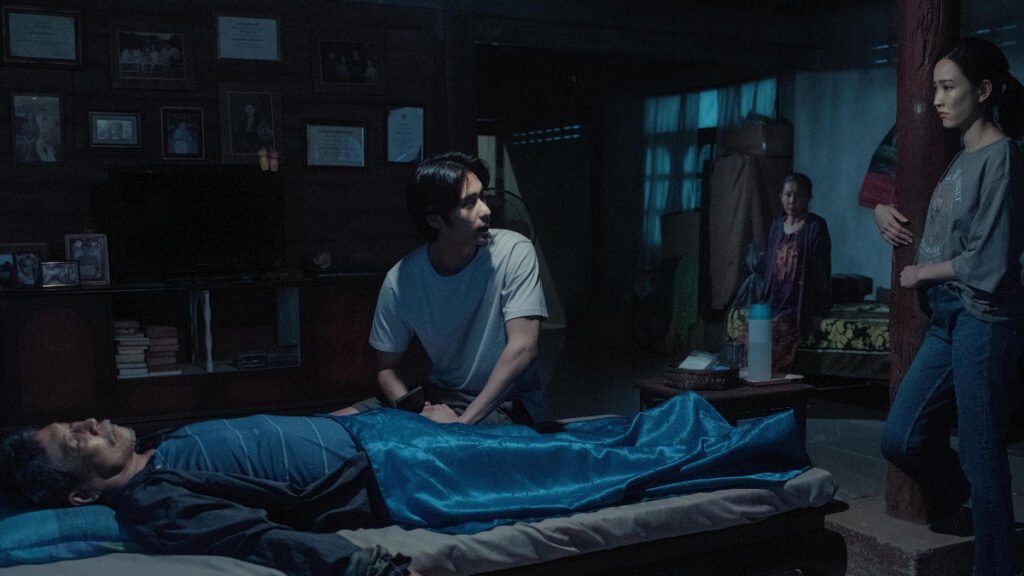
Visually, the village environment adds a lot to the atmosphere of the 2026 Thai drama Delusion. The forests, the darkness, and the remote settings contribute to giving the series its sinister feel, while the POV shots add to putting me in the shoes of the characters in certain tense moments. The show is not consistently scary, but I enjoyed the idea of using the environment as a threat.
The main problem is the fact that the Phap Luang Tai series sometimes equates complication with complexity. There are a number of aspects which could have been investigated further, including the issue of superstition, failure of parents, community monsters, and how far one would go to protect his or her family. All this material is present in the show, although it sometimes gets obscured by attempts to surprise the viewer.
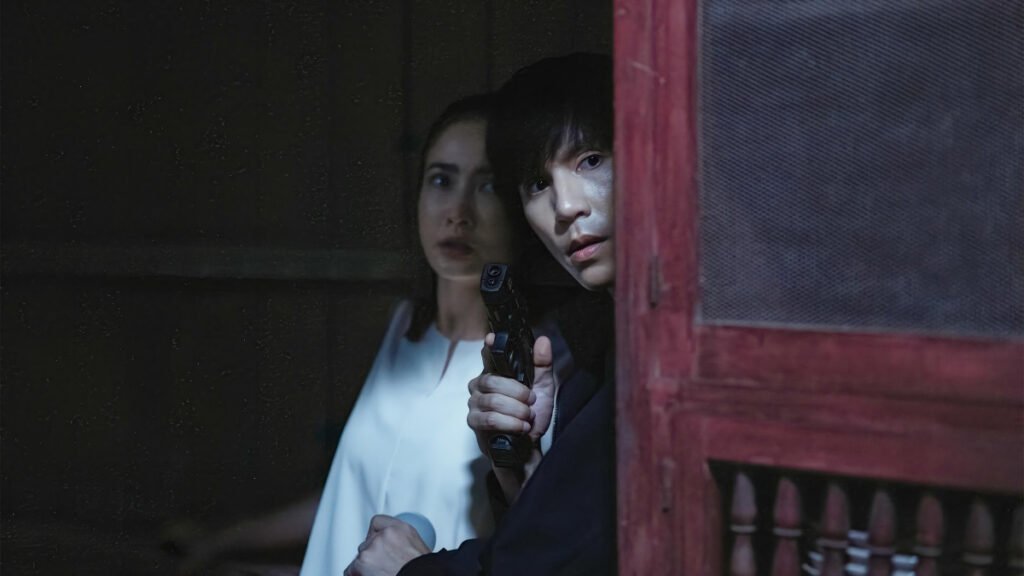
Netflix Delusion Review: Summing Up
Overall, the 2026 Delusion series is pretty interesting and engaging, but its intricate plot and sometimes flawed characters make it hard for the show to evolve into a mystery. There is plenty of mystery, suspense and drama within the family to make me want to continue watching the series, and I really wanted to learn what was going on in Na Sao. The show definitely has some weaknesses in the way that it tells the story and develops its characters, but at the same time, it has a distinct identity.
