

Straight to Hell Review

Director: Tomoyuki Takimoto and Norichika Oba
Date Created: 2026-04-27 19:25
3.5
Straight to Hell Review: Netflix’s Japanese biographical drama 地獄に堕ちるわよ is directed by Tomoyuki Takimoto and Norichika Oba and spans 9 episodes, each roughly an hour long. The series stars Erika Toda in the lead role, supported by Sairi Ito, Toko Miura, Eita Okuno, Kentaro Tamura, and Toma Ikuta, among others.
Straight to Hell Review
Netflix series Straight to Hell begins in the mid-2000s, by which time Kazuko Hosoki has achieved a reputation for her uncannily accurate prophecies. However, the depiction of Kazuko in the media does not come out clean, as she is often accused of being an imposter and a henchman of a gangster. As a means of changing Kazuko’s image, she chooses to let a young and promising author named Minori Uozumi write about her. Her story is told using flashbacks and the shifting focus from Kazuko’s present personality to her troubled past.
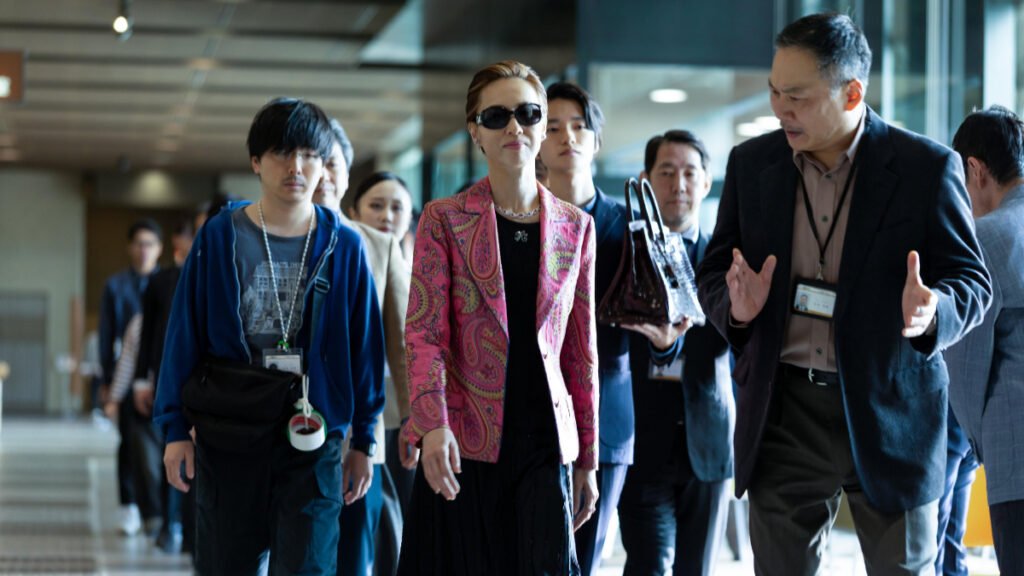
From the beginning, the series dives right into the challenging existence of Kazuko at a young age in war-torn Japan, where merely surviving is enough of a challenge. These first few scenes are particularly heart-wrenching as they describe a child growing up in such a hostile environment because of her poor upbringing. The effects of poverty, starvation, and despair are visible, and one can see from the start that everything Kazuko will eventually become stems from here.
With Kazuko approaching the teen age, Netflix’s Straight to Hell shifts to her first experiences in the nightclub in Tokyo. Deceiving her employers regarding her age in order to get a job at the hostess bar, Kazuko learns the rules of survival in an atmosphere that entails deception and deals. This marks a crucial point in the movie because Kazuko succeeds in shedding her innocence and embracing a more realistic perspective of things.
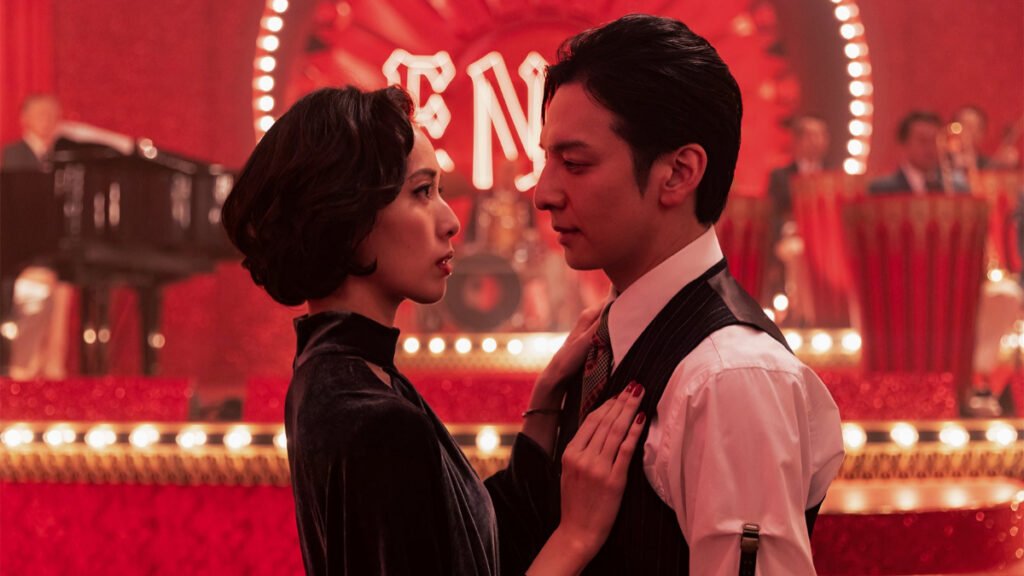
The remaining part of the series describes her efforts towards achieving success, where she opens a nightclub and becomes known as the Queen of Ginza. This particular section is quite intriguing because of the way she handles her business as well as interpersonal relations. However, when it comes to matters concerning love, Kazuko has plenty of problems with each experience costing her something.
The first thing that makes the Japanese series Straight to Hell so interesting is that it does not box Kazuko in the role of being just a protagonist or antagonist. On the contrary, the entire plot of the series revolves around its ability to present an ambiguous depiction of her character that will have the audience asking themselves how they should feel about her throughout the story. Sometimes she is viewed as a poor young girl desperately looking for freedom from poverty, while at other times, she is portrayed as a manipulative woman skilled at using people.
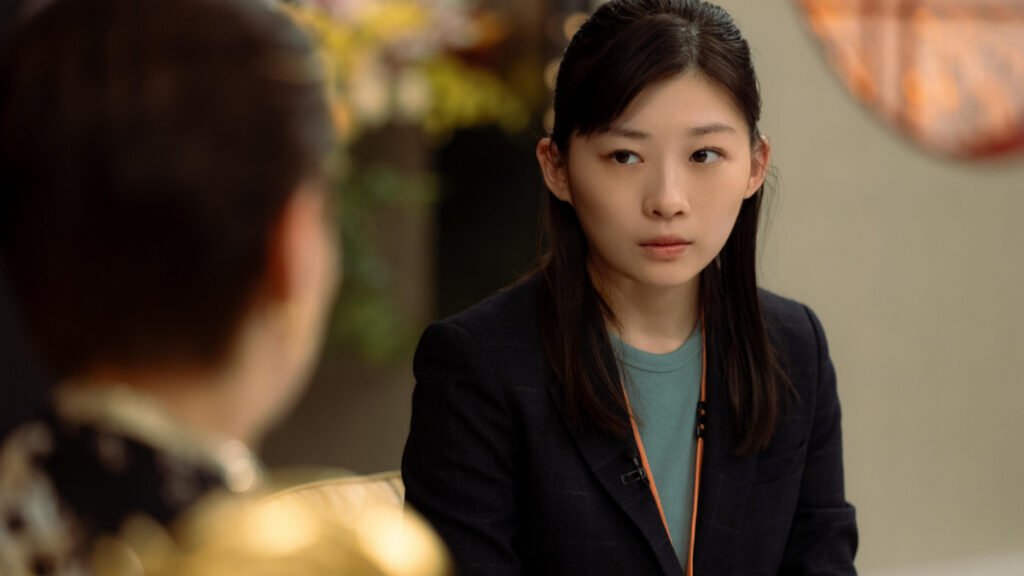
There is no doubt that the key figure in the series and the person who gives the whole production life is Erika Toda. With regard to acting skills, she has certainly put in a brilliant performance as she plays different periods in Kazuko’s life during the course of several decades. It is quite fascinating to watch as even the most cruel scenes played by her are shown in a certain way that makes her actions understandable and justifiable, rather than malicious.
Also Read: Apex Review: Charlize Theron’s Survival Thriller Is Predictable and Lacks an Edge
As a technical endeavour, it cannot be disputed that the series Jigoku ni ochiru wa yo is highly ambitious. Take, for example, the depiction of wartime period events in Japan, especially regarding the nightclubs of Tokyo. The way this aspect is presented serves to immerse Kazuko’s world into reality and give the impression that everything she does happens naturally. What’s more, time passing by deserves to be mentioned.
However, it is precisely in this part that the anime begins to lose its charm. Nine hours, divided into nine episodes, seem excessive for the anime. The tempo of the series may sometimes turn out to be imbalanced, with some chapters being too drawn-out, while others go by way too quickly. In addition, the anime seems to be fond of placing obstacles one after another in its plot, thereby making it clear that it is doing so to demonstrate the stubbornness of Kazuko.
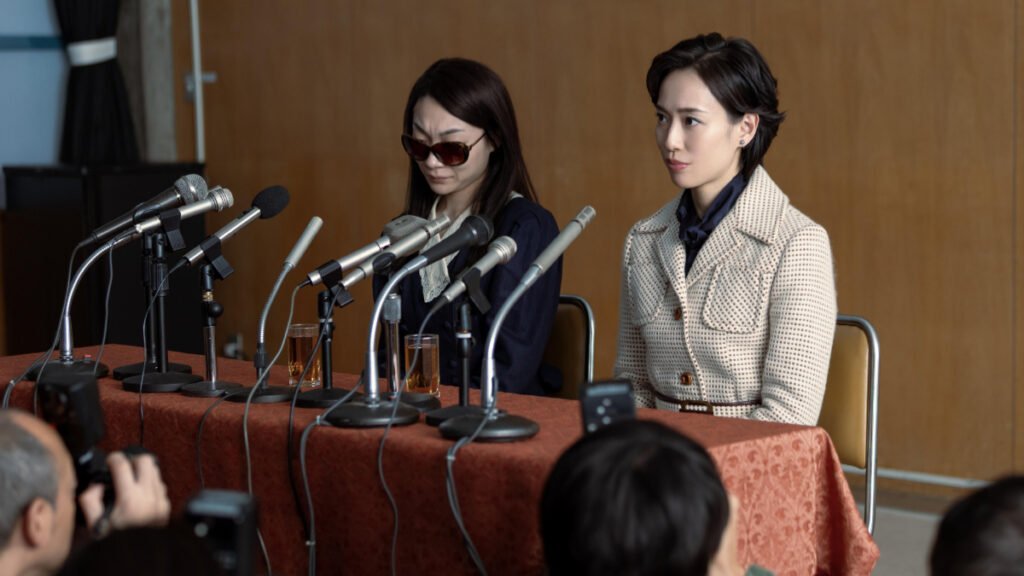
The structure of the Japanese biographical drama Straight to Hell is also somewhat problematic. Non-linear narrative provides the story with a unique flavour, but it can be quite disorienting at times. Switching the timeline happens rather often, but rarely does it affect the storyline itself. Instead, it seems as though the series was simply trying to state the facts and did not want to explore them thoroughly.
Despite all this, however, the topics explored in the show remain quite interesting. Topics ranging from the cost of ambition to a thin line between authenticity and pretending, as well as an identity crafted by oneself, become apparent through this series. It can be stated that Kazuko’s story is the one where survival leads to establishing one’s moral principles, and success ends up in emptiness. She seems quite lonely in her hour of victory.

The reason why this series Straight to Hell, appealed to me was its ambiguity; it did not judge Kazuko’s behaviour, or rather justified it, but presented her life in the context of events and actions taken at the time. For myself, I believe, this ambivalence is what makes the whole series unforgettable.
Netflix Straight to Hell Review: Summing Up
Straight to Hell is an intense and engrossing study of character which excels due to the brilliant acting of Erika Toda, along with its deep themes of ambition and identity. Even though it is hampered by poor pacing and a long runtime, the series still makes for an engaging watching experience.
